
A home can have perfectly good windows, a new roof, and a well-kept yard yet still feel unfinished from the street. The exterior material often explains why. When homeowners weigh veneer versus siding, they are usually deciding between two very different visual statements: the warmth, depth, and permanence of stone or brick veneer, or the broad coverage and clean lines of conventional siding.
The right answer is rarely as simple as choosing one material over the other. In many Shenandoah Valley homes, stone veneer and siding work best together. Siding covers the larger wall areas efficiently, while veneer gives an entry, foundation, chimney, porch, or gable the architectural weight that makes the whole home feel more considered.
Veneer Versus Siding Starts With the Purpose
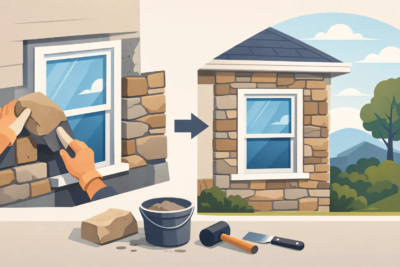
Strictly speaking, veneer is a facing material rather than a full structural wall. Manufactured stone veneer is installed over a properly prepared wall system to create the appearance of natural stone without requiring full-bed stone construction. It is commonly used on exterior facades, chimneys, columns, foundations, retaining features, and interior accent walls.
Siding is a broader category of exterior cladding. Vinyl, fiber cement, engineered wood, natural wood, and metal can all serve as siding. These materials are typically installed across large portions of a home’s exterior and are selected for their balance of coverage, weather protection, maintenance needs, and cost.
That distinction matters because these materials are not always direct substitutes. A homeowner replacing worn vinyl siding on every wall has a different project than someone adding stone around a front entry. The better question is not always, “Which is better?” It is, “Where will this material make the greatest difference to the house?”
The Visual Difference Is More Than Color
Siding can make a home look crisp, traditional, modern, or farmhouse-inspired depending on the profile and color. It creates an orderly backdrop for shutters, trim, doors, landscaping, and rooflines. For homes with large elevations or simple rectangular forms, siding can provide a clean, practical finish without drawing too much attention to itself.
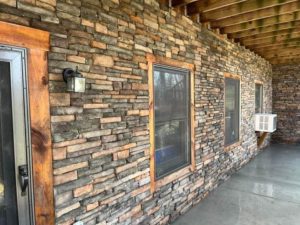
Stone veneer brings texture, shadow, and scale. Cut stone can create a tailored, dimensional appearance around a formal entry. Field stone often feels more natural and relaxed. Ledge stone adds horizontal movement that works well on contemporary homes and outdoor living spaces, while stack stone can create a sharper, more linear look for columns, fireplaces, and accent walls.
Because stone has real surface variation, its appearance changes throughout the day. Morning sun catches the edges differently than late-afternoon light. That depth is difficult to duplicate with a flat exterior product. On a home that feels plain or visually top-heavy, veneer at the foundation, porch, or lower facade can provide needed balance.
Where Stone Veneer Delivers the Greatest Return
Full stone coverage can be beautiful, but it is not necessary for every house. Selective use often creates the stronger design. A well-proportioned veneer application can make a modest exterior look intentional rather than overdone.
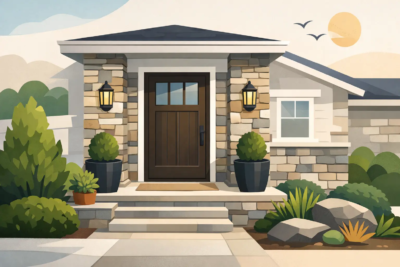
For a front-facing elevation, the highest-impact locations are usually the entry surround, porch piers, lower foundation area, and chimney. These are natural focal points that people see up close. On a side or rear elevation, veneer can distinguish an outdoor kitchen, fireplace, patio wall, or covered porch without forcing the same material across the entire home.
A chimney is another common opportunity. An exposed chimney finished in basic siding can look disconnected from the rest of the home. Stone veneer gives it visual substance and helps it read as an architectural feature rather than a utility enclosure.
Coordinated details make the work feel complete. Matching wall caps, pier caps, keystones, and address numbers can carry the stone selection beyond the main wall surface. These finishing pieces are small compared with the facade, but they prevent a project from looking like a collection of unrelated upgrades.
Cost Depends on Coverage and Installation
Siding generally costs less per square foot than manufactured stone veneer, especially when it is installed across a large exterior area. It is also often faster to install on straightforward walls. For homeowners focused on broad coverage, replacement siding may be the more practical starting point.
Veneer requires more preparation and skilled installation. The wall assembly must be properly detailed for moisture management, including the correct weather-resistive barrier, flashing, drainage plane, and attachment system. Corners, openings, transitions, and grade changes demand careful work. The material itself is only part of the investment.
That does not mean stone veneer is automatically the expensive choice in every renovation. Covering only high-visibility sections can create a major curb-appeal improvement without the cost of a full exterior makeover. A homeowner might keep siding on most elevations while using veneer to upgrade the entry, porch columns, and chimney. This approach often gives the home a more custom appearance while keeping the project focused.
When comparing estimates, make sure the scope is comparable. Ask whether it includes surface preparation, flashing details, trim transitions, corners, caps, cleanup, and any necessary repairs to the substrate. A lower figure may not include the work that protects the installation over time.
Durability and Maintenance in Virginia Conditions
Quality siding can perform well for many years, but its maintenance needs vary by material. Vinyl is relatively low maintenance, though it can crack or warp when damaged or exposed to extreme heat. Fiber cement offers a more substantial appearance and strong durability, but painted products need periodic attention. Wood siding has character, yet it requires the most consistent upkeep to manage moisture, paint failure, and insect exposure.
Manufactured stone veneer is valued for its lasting color, dimensional texture, and resistance to ordinary exterior wear. It does not need painting, and it will not rot like wood. Routine maintenance is typically limited to gentle cleaning when dirt or landscape staining appears.
Still, stone veneer is not maintenance-free simply because it is stone. The performance of the finished wall depends heavily on installation details. Water should be directed away from the wall, roof flashing must be maintained, and soil or mulch should not be piled against the veneer. In the Shenandoah Valley, where rain, winter freeze-thaw cycles, and changing temperatures all affect exterior surfaces, proper drainage is essential.
Choosing the Right Exterior Combination
The most successful veneer versus siding decision begins with the home’s architecture. A Colonial-style home may benefit from refined cut stone around the entrance and foundation. A mountain or craftsman-inspired home may call for field stone or ledge stone on porch piers and chimneys. A newer home with clean lines may look best with stack stone used in disciplined, limited areas.
Consider the roof color, brick if it is already present, window trim, front door, and hardscape. Stone should not be selected in isolation. Its color blend, joint treatment, and profile should support the complete exterior palette. A gray stone that looks appealing on a sample board can feel cold beside a warm brown roof, while a warm earth-tone profile may bring the same house together.
Scale is equally important. Larger stone profiles can overwhelm a small ranch home if used wall to wall, while a very small profile may disappear on a tall two-story facade. This is where a project-specific material selection is more valuable than picking a product solely from a photo.
When Siding Is the Better Choice
Siding remains the better choice when the main need is economical full-wall coverage, especially on rear and side elevations with limited architectural detail. It also suits homeowners who want a uniform exterior appearance or are working within a renovation budget that must cover roofing, windows, gutters, and other priority repairs.
There is no advantage in applying veneer where it does not improve the composition of the home. Stone should have a reason to be there. It can define a base, frame an entrance, anchor a chimney, or create an outdoor feature. Used thoughtfully, it adds character. Used without proportion, it can compete with the home instead of improving it.
For many local homes, the strongest result is neither all veneer nor all siding. It is a purposeful combination that respects the house, suits the setting, and gives the most visible areas a finished sense of craftsmanship.
Before choosing a profile or siding color, stand across the street and look at the home as a whole. Notice where it feels flat, where it lacks balance, and where an architectural detail could make the greatest difference. That view often points to the material decision that will turn an ordinary house into a more beautiful home.