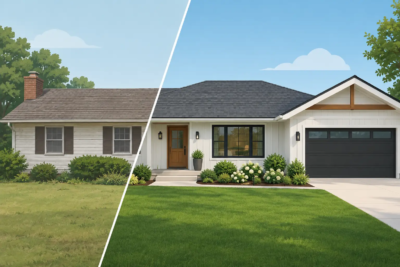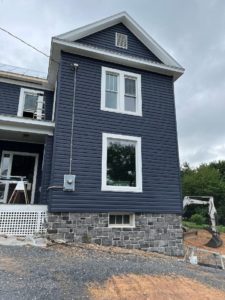

A stone façade can make a modest front entry feel established, or make a new home look as though it belongs on its site. But exterior stone color matching is rarely as simple as choosing a sample that looks good in a showroom. The right veneer must work with the roof, siding or brick, trim, landscaping, and the changing light that moves across a Shenandoah Valley home throughout the day.
The goal is not to make every exterior material the same color. A beautiful home has contrast, depth, and a clear visual hierarchy. The goal is to select stone that connects the fixed elements of the house so the finished project feels intentional from the curb.
Start With the Colors You Cannot Change
Before selecting a stone profile or palette, identify the materials that are likely to remain in place for many years. Roofing is usually the most influential of these. It covers a large portion of the home, carries a strong undertone, and is expensive to replace. Brick, existing siding, painted masonry, and permanent hardscape should receive the same attention.
Look beyond the main color name. A roof described as gray may contain blue, brown, green, or charcoal undertones. Red brick may read warm orange in bright sun, muted burgundy in shade, or even brown from across the street. Siding labeled beige may lean creamy yellow, taupe, or gray. Those underlying colors determine whether a stone selection feels connected or slightly off.
Collect actual samples whenever possible. A small roof shingle, a siding offcut, a paint card, and a stone sample are far more useful together than photos viewed on separate screens. Photography can shift color dramatically, particularly with warm indoor lighting and filtered online images.
Identify the Home’s Temperature
One helpful first decision is whether the home should read warm, cool, or balanced. Warm exteriors often include brown, tan, buff, rust, cream, or soft red notes. Cooler schemes favor charcoal, blue-gray, slate, and crisp white. Many Virginia homes sit comfortably in the middle, combining weathered gray roofing with greige siding, dark trim, and stone that includes both warm and cool mineral variation.
Matching does not require identical temperature. A warm tan field stone can look excellent with a charcoal roof when the stone also carries a few gray notes, or when the trim provides a bridge between the two. Trouble starts when each major surface argues for a different direction: for example, a blue-gray stone against a roof with pronounced reddish-brown tones and creamy yellow siding.
Choose Stone for the Area It Will Cover
The amount of stone on the home changes the decision. A full façade can support more color variation and stronger texture because it becomes a dominant architectural material. Stone used only at the foundation, on porch columns, or around a front entry needs to relate more quietly to the siding above it.
For a small accent area, choose a veneer with at least one color already present elsewhere on the house. On a home with taupe siding and a dark gray roof, a mixed gray-brown ledge stone can tie the surfaces together without making the base look heavy. A very pale stone may disappear beneath light siding, while an almost-black stack stone can create a sharp visual break that makes a short foundation seem more prominent.
Chimneys deserve special consideration. Because a chimney rises through the roofline, it must relate to both the wall materials below and the roof above. A chimney remodel often looks most natural when its stone includes colors from the roof, with enough warmth or contrast to connect it to the rest of the façade.
Let the Stone Profile Influence Color
Color and profile should be selected together. Cut stone tends to create a tailored, architectural appearance, with clean edges that suit traditional and refined home designs. Field stone provides a more varied, natural character. Ledge stone emphasizes horizontal movement, while stack stone delivers tighter lines and a more contemporary texture.
A color blend can look different in each profile. The same gray and tan mix may read formal in a cut-stone application, rustic in field stone, or crisp and linear in ledge stone. Do not approve a color based only on a small loose piece if the finished wall will use a different profile or joint style.
Test Samples Outside, Not Just at the Kitchen Table
Natural light is the final judge of exterior stone color matching. Set sample boards against the actual wall and view them in morning light, direct afternoon sun, overcast conditions, and shade. This matters in the Shenandoah Valley, where wooded lots, mountain views, broad open fields, and porch overhangs can all affect how a façade reads.
A stone with golden highlights may feel welcoming in shade but overly yellow in strong afternoon sun. A cool gray veneer may look elegant beside white trim on a cloudy day but turn blue against warm siding in bright light. Give the samples a few days outside before making a final call.
Stand at more than one distance. Up close, texture and individual stones catch the eye. From the street, the overall value matters more: whether the stone appears lighter, darker, or similar in depth to the roof and siding. A well-balanced façade usually has a clear range of light, medium, and dark elements rather than several materials competing at the same visual weight.
Use Trim, Mortar, and Metal as Connecting Details
Stone is not the only decision. Trim color, mortar choice, shutters, gutters, front doors, and exterior lighting all affect the finished result. These details can either reinforce a thoughtful palette or make a good stone selection feel disconnected.
Mortar is especially easy to underestimate. Light mortar can make individual stones stand out and brighten the overall wall. Medium gray or buff mortar usually creates a softer, more blended appearance. Darker mortar adds definition, but it can make a light stone wall feel busier. On a multi-colored veneer, the best mortar often supports the dominant tone instead of introducing a new color.
Architectural finishing pieces deserve the same care. Wall caps, pier caps, keystones, and house numbers are small elements, but they sit at focal points where people naturally look. Coordinating them with the stone helps a porch, mailbox pier, retaining wall, or entry feature feel like part of one property rather than an added project.
Avoid the Most Common Matching Mistakes
The first mistake is matching a single stone chip to a single siding color. Veneer stone is designed with variation, and its overall blend matters more than any one piece. Focus on the colors that appear most often and the way they read from a distance.
The second is choosing entirely from a phone or computer screen. Screens can make grays look bluer, soften warm tones, and hide texture. Use digital images for inspiration, then make the decision from physical samples viewed at the home.
The third is treating every exterior feature as an accent. If the front door is bright, shutters are dark, the stone is highly variegated, and the roof carries a strong color, the home can lose its center. Decide what should lead. On many homes, the stone and front door are enough visual interest, allowing siding and trim to provide a calm frame.
Finally, do not overlook the setting. A cooler stone may complement a wooded site, slate roof, and black windows beautifully. A warmer blend can feel more at home against brick paths, aged wood, and the softer tones of a traditional rural property. The best choice respects the house and the land around it.
A Confident Way to Make the Final Selection
Narrow the options to two or three stone blends that work with the roof and siding. Compare each one against the home outdoors, then consider the exact application: full front, foundation, chimney, columns, or an entry accent. Review the stone with the proposed mortar, trim, and any coordinated caps or details rather than making each choice in isolation.
For new construction, make the stone decision early enough that siding, paint, roofing, and entry details can support it. For a renovation, let the permanent materials lead and use stone to bring order to what is already there. A custom stone selection is most successful when it looks considered, not copied from a neighboring house.
At Grizzly Stone, the strongest projects begin with that full-picture view. Bring together the samples, stand back from the home, and choose the veneer that makes every fixed element look more deliberate. The result is more than a matched color palette – it is an exterior with the presence and character that makes coming home feel different.