
A front elevation does not need to be covered in stone to feel substantial. Some of the most effective stone veneer trends in the Shenandoah Valley use stone with more intention: a grounded foundation, a welcoming entry surround, a chimney that anchors the roofline, or an interior fireplace wall with real depth and character. The goal is not simply to add material. It is to make every visible element of the home feel like it belongs.
For homeowners planning a new build, a renovation, or a targeted curb-appeal upgrade, the strongest trends share a common thread. They balance timeless regional character with cleaner proportions, carefully selected colors, and architectural details that make the finished project feel complete.
Stone Veneer Trends Favor Purposeful Placement
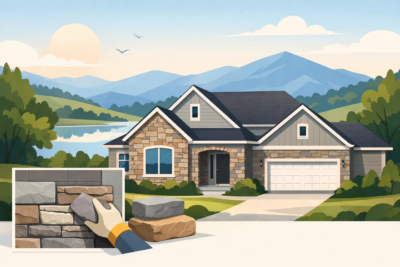
Full stone façades still have their place, particularly on homes with large front elevations or traditional mountain-inspired architecture. But many homeowners are choosing selective stone applications instead. This approach puts the visual weight where it matters most while keeping siding, brick, or painted exterior finishes from competing with the stone.
An entry feature can create an immediate focal point around a front door. Stone at the base of a porch, on columns, or across a foundation gives a home a sense of permanence from the street. Chimney veneer remains one of the most popular applications because it gives a tall vertical element the texture and scale it needs.
Purposeful placement also helps manage a project budget. Rather than treating stone as an all-or-nothing choice, homeowners can direct it toward the areas that will have the greatest visual impact. The best location depends on the home’s architecture. A low, ranch-style home may benefit from a wide foundation treatment, while a two-story home may need a chimney or entry detail to create balance.
Natural Color Blends Are Replacing Flat Gray
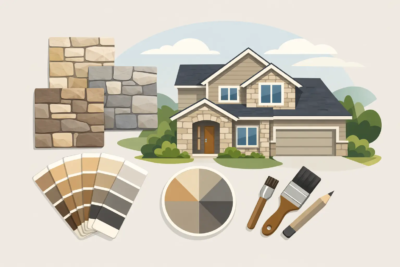
Cool gray veneer was widely used for years, and it can still work on contemporary homes. Yet the current direction is warmer and more varied. Homeowners are gravitating toward stone blends with soft tan, charcoal, brown, buff, cream, and muted rust tones. These combinations feel at home against Virginia’s changing seasons and work especially well with the region’s wooded lots, rolling landscapes, and traditional architecture.
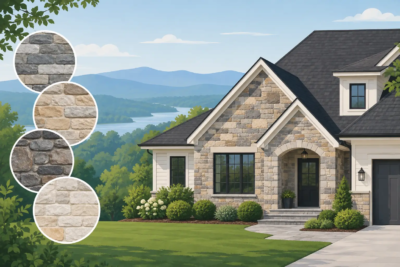
The appeal is not a return to one dominant color. It is a move toward more natural variation. A stone profile with several complementary tones has depth from a distance and interest up close. It can also coordinate more easily with roofing, window trim, shutters, and outdoor living features.
That said, warmer does not always mean lighter. Deep charcoal and weathered brown still bring a strong, refined look when they are balanced by warmer undertones or paired with wood accents, bronze fixtures, and inviting exterior lighting. Before selecting stone, look at fixed elements that will remain in place, including the roof, brick, driveway, and hardscape. Stone should tie those materials together rather than fight them.
Choosing Color for the Light Around Your Home
A sample viewed indoors rarely tells the whole story. Morning light, shade from mature trees, and the direction a façade faces can shift how a color blend reads. A veneer that appears pale in bright sun may feel much richer on a covered porch. Darker profiles can look dramatic on a sunny elevation but may feel visually heavy on a deeply shaded wall.
Viewing several pieces together is essential. Stone is not meant to read as a single flat color, and its variation is part of what gives a finished wall credibility and warmth.
Texture Is Becoming More Deliberate
Texture is one of stone veneer’s greatest advantages, and current designs are using it with more discipline. Ledge stone and stack stone profiles create strong horizontal movement and a clean, tailored appearance. They are often selected for contemporary exteriors, retaining walls, outdoor kitchens, and fireplace surrounds where crisp lines are desired.
Field stone brings a different effect. Its irregular shapes and more relaxed arrangement offer a familiar, enduring character that suits farmhouses, cottages, traditional homes, and properties that sit naturally within the Shenandoah Valley landscape. Cut stone provides a more structured, dimensional look that can feel formal without becoming stiff.
The right profile is not simply a matter of what is popular. It should reflect the home’s lines. Long, low stone pieces can reinforce a horizontal ranch or modern elevation. More varied, substantial pieces can add presence to a tall gable, broad chimney, or large foundation wall. Mixing too many profiles in one visible area, however, can make a home feel busy. Usually, one primary stone profile is enough to establish the look.
Mixed Materials Need a Clear Hierarchy
Stone is increasingly paired with fiber cement siding, board-and-batten panels, painted brick, stained timber, and metal roofing accents. This layered approach can make a home feel custom built, but it requires restraint. Every material needs a role.
A useful rule is to let one exterior finish lead and use the others to support it. On many homes, siding may cover the broad wall areas while stone grounds the lower portion or highlights architectural focal points. On a more stone-forward design, wood can soften an entry or porch ceiling without trying to become a second dominant feature.
Color coordination matters just as much as material coordination. A warm field stone often works beautifully with creamy white siding, soft green trim, black windows, or natural wood. A cooler cut stone may suit crisp white, deep navy, or charcoal exterior finishes. There is no universal formula, but contrast should look intentional rather than accidental.
Avoiding the Patchwork Effect
The most common misstep in mixed-material exteriors is adding every appealing feature at once. Stone, brick, several siding colors, decorative shake, timber, and elaborate metal details can all be beautiful individually. Together, they may dilute the home’s architecture.
Select a limited palette, repeat key colors, and give the stone room to stand out. Matching cap colors, coordinated porch details, and consistent metal finishes help an exterior feel designed as a whole.
Architectural Finishing Pieces Are Part of the Design
The difference between a stone-covered wall and a finished architectural feature often comes down to the details. Wall caps and pier caps create a clean stopping point on columns, seat walls, and landscape features. Keystones add definition above openings. Address numbers integrated into stonework can make a front entry feel considered rather than assembled from separate parts.
These pieces are especially valuable when stone veneer is used selectively. If a homeowner invests in an entry column or a foundation accent, the transitions deserve as much attention as the field stone itself. A properly sized cap can make a column feel substantial. A coordinated keystone can give an arch or opening a stronger visual center.
For builders and remodelers, using coordinated components also helps maintain consistency across the project. It prevents the last phase of the job from becoming a search for a close-enough cap, number, or trim piece that does not match the selected veneer.
Interior Stone Is Moving Beyond the Fireplace
Fireplace surrounds remain a natural home for stone veneer, but interior applications are expanding. Accent walls behind dining tables, wet bars, stair walls, and entry halls can gain dimension without requiring an extensive remodel. A carefully placed interior stone wall creates a strong focal point, especially in open floor plans where large painted surfaces can otherwise feel unfinished.
Scale matters indoors. A heavily textured, dark profile may overwhelm a small room, while a lighter cut stone or restrained ledge profile can add character without closing the space in. Consider surrounding finishes as well. Warm wood floors, simple cabinetry, and neutral paint allow the stone to carry the visual interest.
Interior stone also benefits from good lighting. Wall sconces, picture lights, and nearby natural light reveal texture and tonal variation that may disappear under a single overhead fixture.
Timeless Design Will Outlast Fast-Moving Trends
The most durable trend is choosing a stone profile that fits the home and the property, not a fleeting image. Manufactured veneer offers the flexibility to create that fit through profile, color, and carefully selected finishing elements. At Grizzly Stone, that means helping homeowners and professionals think beyond a single sample toward the complete view from the street.
A stone project should still look right after landscaping matures, exterior paint changes, and styles evolve. Start with the area of your home that needs the most architectural presence, then choose a stone that gives it lasting character. A well-framed entry, grounded foundation, or finished chimney can change the way your whole home is seen every day.