
A chimney has a way of commanding attention. It rises above the roofline, anchors one side of the home, and often becomes the first architectural feature people notice from the street. Manufactured stone veneer for chimneys gives homeowners a practical way to turn that prominent structure into a defining part of the home’s design – without the weight, cost, or construction demands of full-bed natural stone.
For Shenandoah Valley homes, the best chimney projects do more than add stone. They make the chimney feel connected to the home’s siding, trim, roof color, foundation, and surrounding landscape. That takes the right profile, the right details, and an installation plan built for a surface that faces Virginia rain, wind, heat, and winter freezes.
Why Chimneys Are Made for Stone Veneer
A plain chimney chase can look unfinished, especially on a new build with otherwise thoughtful exterior materials. On an older home, dated brick, faded siding, or a patched exterior chase may pull attention away from the rest of the property. Stone veneer gives the chimney depth, shadow, texture, and a stronger sense of permanence.
Manufactured veneer is especially well suited to this application because it delivers the appearance of hand-laid stone at a fraction of the thickness and weight of full stone. That can simplify design decisions on framed chimney chases and make a major visual change possible without redesigning the structure to carry a heavy masonry wall.
The appeal is not limited to traditional homes. A rustic fieldstone profile can give a farmhouse or mountain-inspired home more character. Clean-cut ledgestone can sharpen a contemporary exterior. Stack stone creates strong horizontal movement and works well when the home already has modern lines. The material should support the home’s architecture, not compete with it.
Choosing Manufactured Stone Veneer for Chimneys
The most successful stone choice begins with proportion. A tall, narrow chimney can be overwhelmed by very large individual stones, while a broad chimney mass may make a small, busy profile look cluttered from the street. Look at the chimney as a vertical architectural element, not simply a blank wall to cover.
Match the Stone to the Home’s Existing Materials
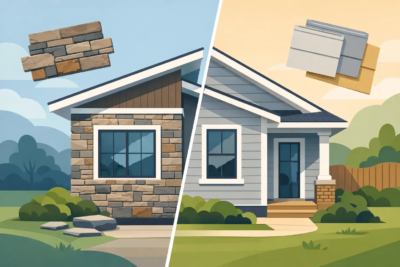
Color is usually the first decision homeowners make, but it should not be the only one. A stone blend needs to work with the roof, siding, brick, shutters, and metal accents already on the home. Warm brown, buff, and gray tones often complement the natural setting and established architecture found throughout the Shenandoah Valley. Cooler grays can create a crisp contrast against white siding and black windows, while warmer blends can soften deep green, cream, tan, or earth-toned exteriors.
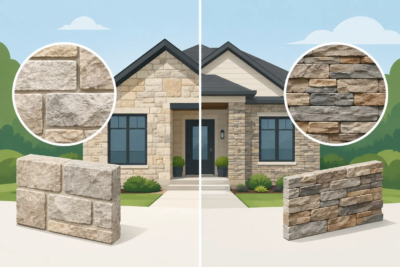
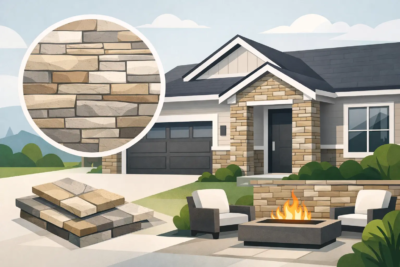
Texture matters just as much. Field stone has a relaxed, time-worn appearance that suits homes with broad porches, timber features, and more traditional details. Ledge stone offers layered character and can visually widen a chimney. Cut stone brings a more tailored, architectural look, while stack stone is often the right choice for a clean, intentional accent on a newer home.
Before committing to a profile, view samples outdoors. Stone color changes dramatically between bright midday sun, overcast skies, and the softer light near dusk. It also reads differently beside an existing roof or siding color than it does in a showroom or on a phone screen.
Decide Whether the Chimney Should Lead or Support
A full-height stone chimney naturally becomes a focal point. That can be exactly right when it faces the driveway, sits at the front elevation, or frames a covered porch. In other cases, the chimney should support a larger composition that includes a stone foundation, entry columns, a front porch, or a retaining wall.
Repeating the same stone in one or two other exterior locations helps the design feel intentional. The repetition does not need to be extensive. A chimney paired with matching column bases or a foundation accent often feels more finished than a chimney treated as an isolated upgrade. Coordinated caps, keystones, and other architectural details can also help carry the material story across the property.
The Details That Protect a Stone Chimney
Stone veneer is durable, but a chimney is not a forgiving place to cut corners. It is exposed to runoff, wind-driven rain, shifting temperatures, and long periods of direct sun. The quality of the wall system behind the stone is every bit as important as the visible finish.
A qualified installer should evaluate the existing chimney chase or masonry surface before work begins. On framed construction, the assembly typically requires a suitable weather-resistive barrier, proper flashing, drainage provisions, lath where required, and a compatible mortar system. The veneer itself is not the waterproofing layer. Water management must happen behind it and around every transition.
Flashing deserves special attention where the chimney meets the roof. Step flashing, counterflashing, kick-out details, and roofing transitions all need to direct water away from the structure. If a roof or flashing problem already exists, adding beautiful stone will not solve it. Address the source first, then install the veneer over a sound, properly prepared surface.
The chimney cap is another important decision. A well-proportioned cap provides a clean finish at the top of the veneer and helps shed water away from the wall below. Depending on the design, this may be a metal cap, a masonry cap, or a carefully integrated combination. The goal is both visual and practical: a finished edge that belongs with the house and protects the work beneath it.
Keep Fire Safety and Code Requirements in View
Not every chimney is the same. A decorative exterior chase for a direct-vent gas fireplace has different requirements than a functioning masonry chimney serving a wood-burning appliance. Clearances around flues, fireboxes, vents, and combustible framing must follow the appliance manufacturer’s instructions and applicable building codes.
This is one reason chimney veneer should be planned with the builder, mason, roofing contractor, or fireplace professional rather than selected in isolation. The correct stone profile is only part of the job. The wall assembly, venting configuration, cap, flashing, and penetrations all need to work together.
New Construction and Remodels Need Different Approaches
On new construction, a stone chimney can be designed into the exterior from the beginning. The builder can coordinate siding termination points, trim, roofing, cap details, and stone coverage before materials are installed. This usually creates the cleanest outcome because every transition is planned rather than adapted.
A remodel can be just as transformative, but it starts with a closer inspection. Existing brick may need cleaning and preparation. A wood-sided chase may reveal moisture damage, missing flashing, or uneven framing after its old cladding is removed. Older homes can also have additions or roof changes that created awkward junctions around the chimney.
That does not make a remodel a poor candidate for veneer. It simply means the project should be evaluated honestly. Sometimes the best value comes from addressing a small repair at the same time as the visual upgrade. A chimney that looks new but has unresolved water intrusion is not a finished project.
Installation Choices That Make Stone Look Believable
Manufactured stone is designed to create natural variation, but the installation pattern determines whether that variation feels convincing. Good workmanship avoids obvious repeating shapes, long continuous grout lines, and clusters of similar stones that draw the eye for the wrong reasons.
Corners are particularly important on a chimney. Veneer corner pieces create the appearance that the stone wraps the structure rather than stopping at the edge. Properly selected and installed corners give the chimney visual depth from every angle, including the views most homeowners see from a driveway or backyard.
Joint treatment also affects the finished character. A fuller, more visible mortar joint can suit traditional fieldstone or rustic profiles. A tighter joint often fits a more formal cut stone look. The right choice depends on the stone itself and the architecture of the home. It is not a detail to leave until the end.
Grizzly Stone helps homeowners, builders, and masons compare profiles and finishing components with the whole exterior in mind. That local, project-specific approach matters when a chimney needs to look at home beside existing materials rather than simply look good on its own.
Care After the Project Is Complete
Manufactured stone veneer is a low-maintenance exterior finish, but low maintenance is not no maintenance. Once or twice a year, look over the chimney for cracked mortar, loose pieces, damaged cap edges, or gaps where flashing meets the roof or wall. Check after major storms as well, particularly if tree limbs or wind-blown debris have contacted the chimney.
Cleaning should be gentle. Ordinary dirt can often be removed with clean water and a soft brush. Avoid harsh acids, aggressive pressure washing, and coatings not intended for manufactured stone. These can damage the surface, alter the color, or create moisture problems where none existed before.
If the stone is part of a fireplace system, keep exterior inspections separate from routine fireplace and flue maintenance. A beautiful chimney still needs appropriate service for the appliance or flue it contains.
A well-designed stone chimney does more than improve curb appeal. It gives the house an anchor – a durable, visible expression of the craftsmanship and character you want people to see before they ever walk through the front door.