
A house can have a new roof, fresh siding, and updated landscaping yet still feel unfinished at the entry, foundation, or chimney. Stone cladding changes that impression because it gives the eye a grounded, permanent element to return to. Used with intention, manufactured veneer stone can turn a flat facade into a home with presence, texture, and a clear architectural point of view.
For Shenandoah Valley homeowners, the best results rarely come from covering every available wall. They come from choosing the right stone profile, placing it where it has visual purpose, and carrying the design through with details that make the whole property feel considered.
Why Stone Cladding Has Such a Strong Effect
Stone naturally creates contrast. It adds depth against lap siding, board-and-batten, brick, stucco, or painted trim, while its texture changes throughout the day as sunlight moves across the surface. A front elevation that once looked broad and plain can gain scale when stone anchors the lower portion of the home or frames the entry.
Manufactured veneer stone is especially well suited to renovation work and new construction because it delivers the character of natural stone in a more manageable wall system. The profile, color blend, mortar treatment, and installation all shape the final appearance. That is why a stone selection should be part of the exterior design conversation early, rather than an afterthought chosen once every other material is already in place.
The effect is not limited to curb appeal. Stone can help establish a sense of arrival at a front door, make a chimney feel like a true architectural feature, or give a porch column enough visual weight to support a larger roofline. Inside, it can turn a fireplace wall or basement bar into a focal point without requiring a full-room remodel.
Choosing Stone Cladding for Your Home’s Style
The right profile is not simply the one that looks best on a sample board. It is the one that relates to the home’s scale, rooflines, siding, trim, and setting. A large home with steep gables may need a bolder profile than a compact ranch, while a historic-inspired design may call for a more traditional texture than a clean-lined new build.
Cut Stone for Defined, Tailored Character
Cut stone has a more formal, dimensional appearance, often with distinct faces and intentional lines. It works well on prominent facades, chimneys, entry walls, and larger columns where the architecture can support a stronger visual statement. On a home with crisp trim and balanced proportions, cut stone can reinforce that tailored look.
Because it has a more structured appearance, cut stone is often a good choice when you want the masonry to feel established without becoming overly rustic. It can be paired successfully with painted siding, fiber cement, and classic exterior color palettes.
Field Stone for a Natural Valley Feel
Field stone has a more relaxed, irregular character. It can feel at home on rural properties, wooded lots, and homes designed to sit comfortably within the Shenandoah Valley landscape. Its varied shapes and surface texture create a less formal appearance than cut stone, making it a natural fit for broad chimneys, porch bases, and exterior accent walls.
Field stone can carry a great deal of visual movement, so it is often best balanced with simple siding and restrained trim colors. The goal is to let the stone feel substantial, not compete with too many other exterior features.
Ledge Stone and Stack Stone for Horizontal Movement
Ledge stone emphasizes long, horizontal lines. It can visually widen a narrow facade, extend the look of a porch, or bring a modern-rustic quality to an outdoor kitchen or fireplace. Stack stone tends to present a tighter, more linear texture and can work particularly well for contemporary homes, clean entry walls, and interior feature areas.
These profiles look excellent when the project calls for a more streamlined result, but scale matters. Fine, tightly stacked stone on a large two-story chimney can appear busy from a distance. A broader ledge profile may be the better match for a larger wall, while stack stone can make a smaller feature feel deliberate and refined.
Where Stone Cladding Makes the Greatest Difference
A full stone facade can be striking, but it is not the only way to create a finished home. Targeted stone applications often deliver the most noticeable change for the investment because they improve the parts of a property people see first.
The front entry is one of the strongest places to begin. Stone around the entry wall, on porch columns, or along a covered stoop gives visitors a clear focal point and makes the door feel connected to the home rather than placed on a flat elevation. A coordinated wall or pier cap can finish the transition from masonry to railing, light fixture, or roof structure.
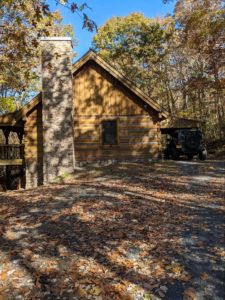
Chimneys are another high-value application. A chimney is already a vertical landmark, so stone gives it the visual weight it deserves. Whether the work is part of a chimney remodel or new construction, selecting a profile that relates to the foundation and entry materials keeps it from looking like an isolated addition.
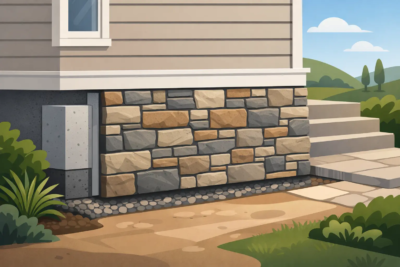
Foundation cladding can also solve a common exterior problem: a home that appears to sit too lightly on its lot. A thoughtfully proportioned stone base visually grounds the structure. On a sloped property, it can help connect exposed foundation areas to retaining walls, steps, or landscape features.
For interior projects, a fireplace surround, feature wall, or bar front is usually more effective than applying stone everywhere. The room needs enough open wall area for the stone to stand out. In a smaller space, a lighter color blend or a thinner, linear profile can preserve brightness while still adding texture.
The Details That Make Stone Look Complete
The stone itself is only one part of the finished result. Architectural details determine whether a project looks integrated or pieced together over time. Caps, keystones, trim, and house numbers provide clean edges and visual transitions that masonry alone cannot always achieve.
Wall and pier caps are particularly useful on porch walls, gate posts, landscape columns, and outdoor living spaces. They protect the top of the masonry while giving the structure a finished silhouette. A cap that is too small or unrelated in color can weaken the look, so it should be selected with the stone profile rather than afterward.
Architectural keystones can add distinction above arched openings, windows, or entries. Coordinated stone street numbers offer a more subtle but meaningful upgrade, especially when the home is set back from the road. These pieces help the exterior read as one design instead of a collection of individual improvements.
At Grizzly Stone, LLC, custom-made veneer stone and matching finishing components allow homeowners and building professionals to plan those relationships together. That matters when a new facade, chimney, columns, and address detail need to share the same visual language.
Planning a Stone Cladding Project That Ages Well
Start by identifying the view that matters most. For many homeowners, it is the approach from the street. For others, it may be the backyard patio, the fireplace wall, or the side elevation that is visible from a driveway. Knowing the primary view helps determine where stone will have the greatest impact.
Next, consider proportion. Stone should relate to the size of the wall and the architecture around it. A short stone wainscot can look undersized beneath a tall gable, while an oversized chimney treatment can overwhelm a modest one-story home. Project photos, exterior elevations, and samples viewed in natural light make these decisions easier.
Color deserves the same attention. Look at the roof first, then the siding, brick, shutters, and surrounding landscape. A stone blend does not need to match every surface exactly. In fact, it usually should not. It needs a shared undertone or contrast that feels intentional. Warm gray stone may complement charcoal roofing, while buff and brown tones can bring warmth to a home with cream siding or weathered wood accents.
Finally, plan for professional installation and the conditions around the wall. Proper surface preparation, flashing, drainage details, and installation methods matter for performance, particularly in a region that experiences rain, winter temperatures, and freeze-thaw cycles. Quality materials deserve craftsmanship that protects the home as well as its appearance.
The best stone project does more than add a new material to the house. It gives the home a stronger identity, from the first view at the road to the details noticed up close at the front door.