
A stone façade can change the entire presence of a house, but the material choice affects far more than appearance. When homeowners compare thin stone versus full bed products, they are really deciding how the stone will be installed, what the wall can support, how the project will be detailed, and where their budget delivers the most impact.
For most exterior renovations, interior accent walls, chimneys, and entry features in the Shenandoah Valley, manufactured thin stone veneer offers the character of full-depth masonry without requiring the same structural support. Full bed stone still has a place, especially where a traditional masonry assembly or substantial landscape wall is part of the plan. The right answer depends on the project, not simply the look you prefer.
What Is Thin Stone Veneer?
Thin stone veneer is a lighter stone facing made to replicate the depth, texture, and color variation of natural or full-depth stone. It is typically installed on a properly prepared wall surface using mortar, much like tile, but with the visual weight and architectural character of masonry.
Manufactured veneer profiles can range from rugged field stone to refined cut stone, horizontal ledge stone, and clean stack stone. Because it is designed as a facing material rather than a load-bearing wall, thin veneer can be used on wood-frame construction, masonry surfaces, fireplaces, foundations, columns, and interior walls when the substrate and installation details are correct.
The practical advantage is significant: thin veneer adds visual substance without asking the existing structure to carry the weight of a full masonry wall. That opens the door to targeted improvements, such as a stone wainscot, a chimney remodel, or a new front-entry surround, that may be difficult or unnecessarily expensive with full bed materials.
What Does Full Bed Stone Mean?
Full bed stone refers to thicker, deeper masonry units. Depending on the product and application, it may be structural stone or a full-depth veneer installed as part of a traditional masonry wall system. It has a more substantial profile, requires more support, and generally calls for a more involved installation process.
A full bed stone wall is not merely attached to the face of a home in the same way thin veneer is. It needs a properly designed foundation, footing, ledge, or other structural support to carry its weight. That makes it a natural choice for freestanding walls, certain new-construction applications, and projects where the masonry assembly is being built from the ground up.
Its depth can create a powerful, authentic shadow line around windows, corners, and wall returns. Yet that depth also introduces more design and construction considerations. Openings need to be planned carefully, foundations may need to be wider, and transitions to siding, trim, roofing, and other finishes become more complex.
Thin Stone Versus Full Bed: The Differences That Matter
The most visible difference is thickness, but weight and installation are often the deciding factors. Thin veneer is commonly measured in pounds per square foot and can be installed over an approved prepared wall. Full bed stone is much heavier and must be supported from below.
For a homeowner updating an existing house, this distinction can determine whether a stone feature is practical. A front elevation with wood framing may be an excellent candidate for thin veneer. Building a full-depth stone face in the same location could require structural evaluation, new support at the base of the wall, and more extensive construction around doors and windows.
Installation time also differs. A skilled mason still matters with either material, particularly for layout, mortar work, corners, and clean details. But thin veneer usually involves less handling, fewer structural modifications, and a more direct path from preparation to finished surface. That can be especially valuable during a remodel where homeowners want to improve curb appeal without rebuilding a large section of the house.
Cost should be viewed through the same lens. Material pricing matters, but labor, wall preparation, structural support, site access, and detail work all shape the finished investment. Thin veneer can often provide a high-end stone appearance with a lower total project cost because it reduces the demands placed on the structure and the installation crew. Full bed stone may be worth the additional investment when its depth and construction method serve the project rather than complicate it.
Where Thin Stone Makes the Most Sense
Thin stone veneer is often the better fit when the goal is architectural transformation on an existing home. It works particularly well for a chimney that feels undersized, a dated brick front, a bare foundation, or an entry that needs a stronger focal point.
An interior fireplace surround is another excellent application. Full bed stone can place considerable load on framing and floors. Thin veneer provides the same visual texture while keeping the assembly more manageable. The same is true for kitchen backsplashes, feature walls, and basement bar areas where a full masonry wall would be excessive.
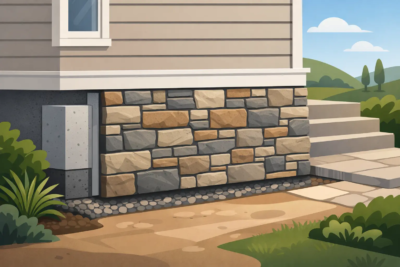
On exteriors, thin veneer gives homeowners flexibility in how much stone they use. A complete façade can be beautiful, but so can a measured application: stone around the front door, a foundation wainscot, a pair of columns, or a chimney that anchors the roofline. These focused upgrades can make a home look intentionally designed rather than simply decorated.
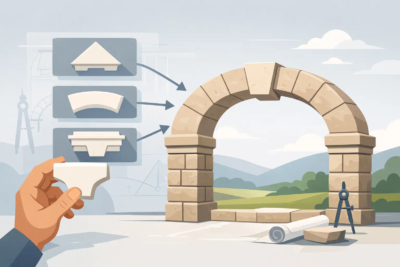
Thin veneer also pairs well with coordinated finishing details. Matching keystones, address numbers, wall caps, and pier caps can carry the stone selection beyond one surface and give the property a more complete architectural finish.
Design Comes Before Square Footage
The strongest stone projects begin with proportion. A rustic field stone may complement a farmhouse-inspired exterior, while a structured cut stone can suit a more traditional home. Ledge stone often emphasizes horizontal lines, making it a good choice for low foundations, retaining features, and broad façades. Stack stone can create a more contemporary, tailored effect.
The profile should work with the home’s roof color, siding or stucco tone, window trim, and surrounding landscape. A stone sample may look appealing on its own but feel too busy or too dark once it covers a large wall. Reviewing the complete color palette and the intended application helps avoid that mistake.
When Full Bed Stone Is Worth Considering
Full bed stone is a sensible choice when the project is designed as traditional masonry from the beginning. Freestanding garden walls, substantial site walls, and certain new homes may call for the physical depth and construction method that full bed stone provides.
It can also be the preferred material when a specific historic or architectural requirement calls for full-depth masonry. In these situations, the wall system, support conditions, and drainage details should be considered early by the builder, mason, and designer. Trying to add full-depth stone late in the process is where costs and complications tend to grow.
That does not mean full bed stone is automatically better looking. A well-designed thin veneer installation has convincing depth, natural variation, and carefully finished corners. The difference is often more about construction than curb appeal. On a completed home, visitors will notice the quality of the design and craftsmanship long before they ask how thick the stone is.
Questions to Ask Before Choosing Stone
Before selecting a profile, start with the scope of the project. Is the stone being installed on an existing framed wall, a masonry surface, a fireplace, or a new freestanding feature? Does the project need structural support or only a properly prepared veneer substrate? Is the goal to cover a large façade or create one high-impact focal point?
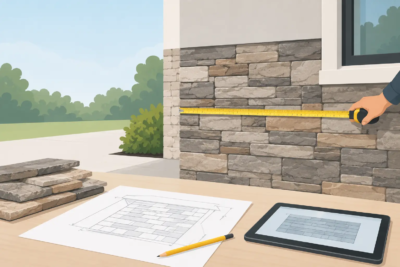
It also helps to think beyond the immediate wall. Where will the stone begin and end? How will it meet siding, trim, brick, or grade? Will corners, caps, or keystones be needed? These details are not afterthoughts. They are what make the finished project look built for the home instead of added onto it.
For local homeowners and construction professionals, an estimate should account for the whole installation picture: stone profile, square footage, corners, surface preparation, accessory pieces, and the desired layout. Grizzly Stone can help bring those selections into focus so the finished work feels cohesive from the street to the smallest architectural detail.
A stone project earns its value every time you pull into the driveway or welcome someone through the front door. Choose the material system that supports the home you have, then choose a stone profile that makes it feel like the home you always wanted.