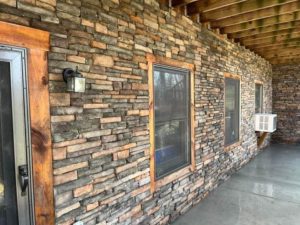

A stone chimney that rises from the foundation, a welcoming front entry, or a carefully framed accent wall can change how a home feels before anyone steps inside. Stone veneer installation cost is part of that decision, but the right number is not simply a price per square foot. It reflects the scope of the work, the condition of the surface, the selected stone profile, and the craftsmanship required to make the finished detail look like it belongs on the home.
For Shenandoah Valley homeowners, stone veneer is often chosen for more than a quick cosmetic update. It is a way to give a new build character, make a dated façade feel intentional, or carry a favorite material from a front elevation to a chimney, foundation, or outdoor living area. Understanding where the cost comes from makes it easier to plan a project with confidence.
What Affects Stone Veneer Installation Cost?
Manufactured stone veneer is a highly visual material, but installation is a construction process. The final budget generally includes stone materials, setting materials, labor, surface preparation, trim and finishing components, and any repairs or access requirements discovered before work begins.
A small, straightforward interior accent wall will not be priced like a two-story exterior chimney. Likewise, a clean wall on a new build is typically less complicated than an older brick or siding surface that needs repair, flashing adjustments, or removal work before the veneer can be installed properly.
As a broad planning range, professionally installed manufactured stone veneer commonly falls around $15 to $40 or more per square foot. Smaller projects can carry a higher per-square-foot cost because setup, cutting, and finishing work are spread over less area. Large, open wall sections may be more efficient, while intricate architectural features may exceed that range. An on-site or project-specific estimate is the only dependable way to establish the actual investment.
Stone profile and color selection
The stone itself is one of the clearest cost variables. Field stone, ledge stone, cut stone, and stack stone each create a different architectural effect, and each may require a different amount of fitting, trimming, and joint work during installation.
A profile with varied stone sizes and irregular edges can create a richly natural appearance, but it may take more time to lay out and fit around corners, windows, or openings. A more linear profile may install differently, yet still require precise attention to keep courses level and transitions clean. Color blends, texture, and the amount of stone needed to create the chosen look all influence material pricing.
The goal is not to select the least expensive profile in isolation. It is to select a stone that fits the home’s siding, roof color, trim, and architectural style. A well-chosen veneer can make a modest entry surround look complete, while the wrong profile can feel disconnected from the rest of the house.
Project size, shape, and location
Square footage matters, but shape matters almost as much. A rectangular wall with few interruptions is generally more efficient to veneer than a façade with multiple windows, doors, utility boxes, corners, and roofline transitions. Every interruption calls for measured cuts and careful finishing.
Location also affects labor. Ground-level foundation veneer is easier to reach than a tall chimney chase or second-story gable. Scaffolding, ladders, site protection, and the ability to safely move materials all contribute to the scope. Projects in tight spaces or on steep lots may need additional planning as well.
This is why two homes with the same amount of visible stone can receive very different estimates. One may be a simple front-entry feature. The other may include elevated work, complicated corners, and a number of detailed transitions that are essential to keeping moisture out and the finish looking clean.
The Preparation Behind a Lasting Stone Veneer Installation
The visible stone is only the final layer. A sound installation starts with a properly prepared substrate and the correct moisture-management details for the application. Exterior installations may require water-resistive barriers, flashing, metal lath, scratch coat, mortar, and properly prepared transitions around windows, doors, and roof intersections.
If existing siding, old veneer, damaged sheathing, or deteriorated masonry must be addressed first, that work adds to the cost. It also protects the value of the investment. Covering a problem without correcting it can lead to failures that are far more expensive than doing the preparation correctly from the start.
Interior projects may have fewer weather-related requirements, but they still need stable, suitable wall surfaces and thoughtful layout. A fireplace wall, for example, often has outlet locations, mantels, hearths, and adjacent finishes that need to align cleanly with the stone. These details are where an ordinary wall becomes a finished architectural feature.
Mortar joints, corners, and finishing details
Corners are one of the details homeowners often overlook when first estimating stone veneer. Outside corners, returns around columns, and transitions at wall edges require the stone to wrap convincingly rather than stop abruptly. They take additional material and labor, but they make a significant difference in the final appearance.
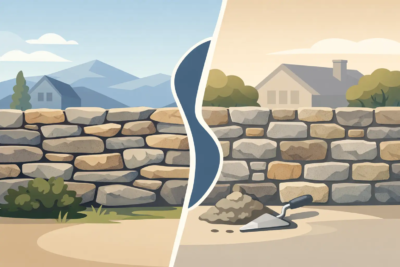
Joint style also has an effect. A dry-stack appearance may call for tightly fitted stone and close attention to alignment. A grouted joint can create a more traditional masonry character, but it requires consistent spacing, tooling, and cleanup. Neither is automatically better. The right choice depends on the stone profile and the architectural direction of the home.
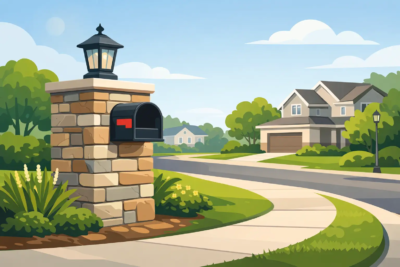
Coordinated details should be part of the conversation early. Wall caps, pier caps, architectural keystones, and address numbers can help connect a stone façade to entry columns, retaining walls, or mailbox features. Adding them later can be possible, but planning them from the beginning often produces a more cohesive result.
Where to Spend and Where to Simplify
A well-designed stone project does not require covering every exterior wall. In fact, selective placement often has the strongest visual impact. A front entry, lower foundation section, chimney, garage surround, or porch columns can provide the character homeowners want while keeping the project focused.
If the budget needs to be managed, simplify the coverage area before cutting back on preparation or skilled installation. A smaller stone feature installed correctly will age better and look more convincing than a larger area compromised by rushed transitions or incomplete moisture details.
Another practical decision is whether to phase the work. A homeowner may start with a front façade and build the stone palette around future columns, a chimney remodel, or an outdoor kitchen. Choosing a profile and finishing pieces that can be repeated later helps the property retain a unified look as improvements continue.
Questions to Ask Before Comparing Estimates
When reviewing stone veneer estimates, compare scope as carefully as price. A lower figure may not include removal, surface repair, flashing, corner pieces, scaffolding, mortar, cleanup, or finishing components. Those omissions can make an initial number look attractive while shifting necessary costs to later stages.
Ask what substrate preparation is included, how corners and wall terminations will be handled, whether materials are included, and what assumptions have been made about the existing surface. For exterior work, ask how moisture management and flashing details will be addressed. For a remodel, confirm whether the estimate accounts for removal and disposal of existing materials.
It is also helpful to discuss the desired visual outcome rather than asking only for a square-foot price. A photo of the home, the target elevation, and a few examples of stone styles can help a supplier or installer recommend a profile that works with the home instead of simply filling an area with material.
Plan the Stone Feature Around the Whole Home
The best stone veneer projects look intentional from every angle. They relate to the roof, trim, porch design, landscaping, and the scale of the house. A rustic field stone may bring warmth to a country property near Broadway or Rockingham County, while a crisp cut stone or stack stone can give a newer home near Charlottesville or Waynesboro a more tailored presence.
Grizzly Stone helps homeowners and building professionals consider those choices as a complete exterior design, from the primary veneer profile to the finishing elements that give a project its final polish. That local perspective matters because a stone feature should suit both the home and the regional character around it.
Before setting a budget, identify the one area of your home that would benefit most from a lasting architectural change. A focused stone feature, chosen with care and installed with the right preparation, can be the detail that turns a house into a beautiful home.