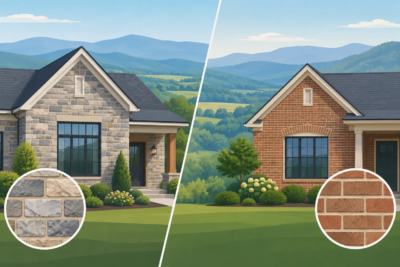

A home does not need a full exterior rebuild to make a stronger first impression. Many of the most compelling residential stone trends begin with one highly visible area: a front entry, chimney, foundation, porch column, or gable. For homeowners across the Shenandoah Valley, the goal is less about following a passing style and more about choosing stone that feels right for the house, the property, and the surrounding landscape.
Stone veneer has the range to do both. A carefully selected profile can make a new construction home feel established, bring warmth to a plain siding façade, or give a dated brick-and-vinyl exterior a more intentional architectural finish. The strongest projects balance color, scale, texture, and placement rather than covering every available surface.
Residential Stone Trends Favor Natural Variation
Perfectly uniform color and tightly repeated patterns are giving way to surfaces with more depth. Homeowners are increasingly drawn to stone that shows a believable mix of tones, sizes, and textures. That may mean soft grays with touches of warm brown, weathered buff tones, or a blend that picks up the colors already present in the roof, trim, and landscaping.
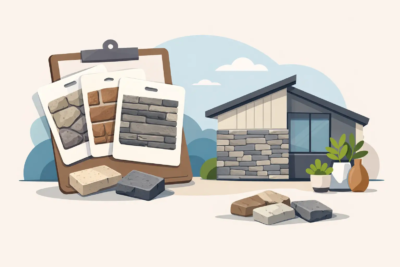
This does not mean every project needs dramatic color contrast. Often, the most successful exterior stone selections are restrained. A field stone profile with varied shapes can add a relaxed, grounded look to a home with a wooded setting. Cut stone can bring more order and refinement to a traditional façade. Ledge stone offers horizontal movement that works especially well on contemporary homes and low foundation walls.
The right amount of variation depends on the architecture. A home with detailed shutters, decorative trim, and a steep roofline may benefit from a quieter stone blend. A simpler ranch or craftsman-style exterior can often carry a more textured profile without feeling busy.
Warm Neutrals Are Replacing Cool Gray-Only Palettes
Gray remains useful, especially when it connects with charcoal roofing or dark window frames. But homeowners are moving beyond the all-gray look. Blends that include cream, taupe, sand, brown, and subtle rust create a warmer appearance that sits naturally against Virginia’s changing seasons.
Warm-neutral stone is also forgiving. It pairs comfortably with white, beige, sage, black, and many earth-toned siding colors, making it a practical choice for renovations where every material is not being replaced at once. Rather than fighting the existing home, the stone can help tie its elements together.
Intentional Accent Areas Matter More Than Full Coverage
One of the most practical residential stone trends is selective placement. Stone has visual weight, which is why a well-chosen accent can accomplish more than wrapping the entire front elevation. A chimney clad in veneer stone becomes a focal point. A front entry gains presence when stone rises around the door or supports the porch roof. Foundation stone can visually anchor a house that otherwise appears to sit lightly on the lot.
For many homeowners, this approach also makes the project easier to phase. A front façade or chimney remodel can create a meaningful change now, while leaving room to add matching columns, retaining walls, or a rear patio feature later.
Placement should follow the structure of the house. Stone looks most convincing when it appears to support or anchor something: the base of the home, a column, a fireplace, a chimney, or a substantial entry. Random patches of stone placed where there is no architectural reason for them can make an exterior feel disconnected.
Chimneys and Entries Continue to Lead
Chimneys remain one of the best places to use stone veneer because they are naturally vertical, prominent, and associated with durable masonry. A full chimney treatment can update an exterior from the street and create a finished look inside when the same stone continues onto a fireplace surround.
Entries are equally important. The front door is where visitors meet the home up close, so the details matter. Stone around the entry, on porch columns, or along a raised landing can add texture that paint alone cannot provide. On a larger home, these accents also help break down broad siding walls into more welcoming proportions.
Coordinated Details Create a Finished Design
The difference between a stone project that looks installed and one that looks designed often comes down to the finishing pieces. Caps, keystones, address numbers, and pier caps are not afterthoughts. They establish clean transitions and give masonry features a deliberate edge.
A wall cap can turn a low landscape wall into a usable seating edge. Pier caps give gateposts and entry columns a finished top line. Architectural keystones can add definition over an arch or opening. Even custom street numbers set into stone can make the front of a home feel more personal and complete.
These elements work best when planned with the veneer selection instead of added at the end. Matching or complementary finishes help the project read as one composition. That is particularly valuable on homes where stone appears in more than one area, such as the foundation, front columns, and a detached mailbox or sign feature.
Mixed Materials Need a Clear Hierarchy
Stone is increasingly being paired with painted siding, natural wood, board-and-batten panels, brick, and dark metal accents. This combination can look current without losing a sense of permanence, but it requires restraint. When every material is competing for attention, the home can feel pieced together.
Choose one primary exterior material and let the others support it. On a siding-forward home, stone may belong at the base, chimney, and entry. On a more masonry-driven design, wood accents can warm up the porch ceiling or gable details. Dark trim can sharpen the overall composition, but it should relate to the roof, lighting, or door hardware rather than appear as an isolated trend choice.
Texture also matters. A rough, deeply dimensional field stone beside heavily grained timber can feel rustic and substantial. A cleaner cut stone profile with smooth fiber-cement siding feels more tailored. Neither approach is automatically better. The best choice reflects the home’s architecture and how formal or relaxed you want it to feel.
Interior Stone Is Becoming More Focused
Inside the home, stone veneer is being used with more purpose than blanket coverage. Fireplace surrounds remain a natural application, especially where a living room needs a stronger focal point. A stone fireplace can suit a modern room as easily as a rustic one depending on the profile, mortar treatment, and mantel selection.
Feature walls are another option, though scale is critical. A narrow wall in an entry, dining room, or finished basement can add character without closing in the space. Ledge stone is often effective in contemporary interiors because its horizontal lines feel organized and clean. More irregular field stone brings a softer, more traditional character.
Interior applications should account for lighting. Stone that looks warm and dimensional in daylight may appear much darker under cool recessed lighting. Before committing, consider the room’s natural light, ceiling height, adjacent flooring, and the color of the mantel or built-ins.
Craftsmanship Still Outlasts Any Trend
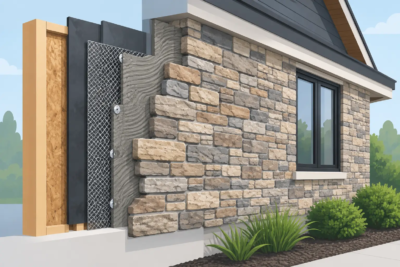
No profile or color can compensate for poor proportion, rushed layout, or unfinished edges. The lasting value of stone veneer comes from thoughtful design and careful installation. Mortar joints, corners, transitions, and caps all influence whether the finished surface feels authentic and well built.
It is also worth considering the view from more than the curb. Walk up to the house. Stand at the front door. Look back from the driveway. Stone is experienced at different distances, and a selection that looks strong from the road should also reward a closer look.
For Shenandoah Valley homeowners, the most enduring direction is clear: use stone where it gives the home structure, warmth, and a sense of place. Whether the project is a chimney remodel, a new front entry, or a complete exterior plan, Grizzly Stone can help turn a material choice into a home feature that feels like it has always belonged there.