
A chimney can occupy a surprisingly large share of a home’s exterior. When its brick is faded, its block is plain, or an earlier repair has left mismatched materials behind, the whole house can feel unfinished. This chimney refacing example shows how a carefully selected manufactured stone veneer can turn that problem area into an architectural feature that feels connected to the rest of the property.
For homeowners across the Shenandoah Valley, a stone-faced chimney often makes sense because it adds character without requiring the weight, cost, and extensive foundation considerations of full-bed natural stone. The best result is not simply a new surface. It is a chimney with the right scale, color movement, trim details, and installation approach for the home around it.
The Starting Point: A Chimney That Felt Out of Place
Picture a two-story home with warm siding, dark roofing, and a tall front-facing chimney finished in aging red brick. The brick is structurally sound, but its color clashes with the roof and the foundation. A few areas have been patched over the years, making the chimney look more like a repair history than an intentional part of the design.
The homeowners do not need to rebuild the chimney. They need to reface the visible exterior with a material that gives the elevation more depth and better ties the house together. This is an ideal use for manufactured stone veneer, provided the existing chimney and flashing are inspected first.
Before any stone is selected, a qualified professional should check for loose masonry, deteriorated mortar, moisture entry, cracked crowns, failed flashing, and chimney movement. Veneer improves appearance, but it cannot correct an active water problem or a damaged structure underneath. If the chimney is wood-framed rather than masonry, it needs the appropriate weather-resistive barrier, lath, drainage plane, and substrate for the veneer system.
Chimney Refacing Example: From Patchwork Brick to Fieldstone
For this example, the homeowners choose a fieldstone-style veneer in a blend of soft gray, weathered tan, and muted brown. The goal is a natural Shenandoah Valley look that works with the home’s wooded setting without making the chimney appear overly dark or heavy.
Fieldstone is a strong choice for a broad chimney face because its varied stone sizes create a relaxed, established character. Larger pieces give the chimney visual presence, while smaller stones help the mason maintain a natural pattern around corners and near transitions. The color blend also picks up the brown tones in the siding and roof while introducing enough gray to feel current.
The transformation begins at the base. Rather than stopping the veneer at an arbitrary point above grade, the stone runs down to a clean, properly detailed termination that relates to the foundation. This matters because a chimney should look grounded. A visible strip of unrelated brick or plain block at the bottom can weaken an otherwise polished design.
As the veneer rises, the mason avoids obvious repeating shapes and long continuous mortar joints. Stone placement should look balanced from a distance, not just neat from a few feet away. Corners receive matching veneer corner pieces so the chimney reads as solid stone rather than as a flat decorative skin wrapped around a box.
Near the top, a complementary cap or crown provides a crisp finish. Depending on the chimney’s construction and code requirements, the crown itself may be repaired or replaced before the veneer work begins. The visual detail is simple, but it is essential: water needs to shed away from the chimney, and the top needs to look intentional against the roofline.
The finished chimney no longer competes with the home. It anchors it. The fieldstone creates texture from the street, and the color variation adds interest throughout the day as sunlight moves across the face of the stone.
Choosing the Right Stone Profile for Your Home
A fieldstone chimney is only one direction. The right profile depends on the architecture, surrounding finishes, and the role you want the chimney to play.
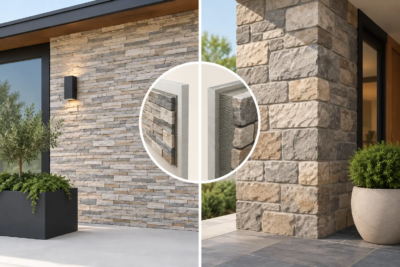
A traditional home with shutters, a covered porch, or classic trim may benefit from cut stone veneer. Its more defined faces and coursed appearance can bring a tailored, substantial look to a formal front elevation. Ledge stone works well when the goal is horizontal movement and a slightly more rustic, mountain-inspired feel. Stack stone creates a cleaner, more contemporary texture, especially on a shorter chimney or a chimney that shares the façade with modern siding and simple trim.
Color deserves equal attention. A light blend can brighten a shaded side of the house and keep a tall chimney from feeling dominant. Mid-tone grays, tans, and browns are flexible choices for many Valley homes because they coordinate with common roof colors and natural surroundings. A darker profile can be striking, but it works best when repeated elsewhere, perhaps on a foundation accent, column, retaining wall, or entry feature. One isolated dark chimney can look disconnected.
Bring samples outside before making a final choice. Stone that looks warm indoors may read gray in open daylight, while a subtle blend may show more contrast when installed across a large chimney face. Look at the samples beside the roof, siding, trim, and existing hardscape at different times of day.
Details That Make a Reface Look Complete
The difference between an acceptable chimney reface and a finished architectural upgrade often comes down to the transitions. Stone is the focal material, but surrounding components determine whether the project looks integrated.
Flashing is one of the most important details. Where the chimney meets the roof, properly installed flashing must direct water away from the intersection. Stone veneer should never cover a flashing problem. If roof work is planned soon, coordinate the chimney project with the roofer so neither trade has to disturb finished work later.
Mortar treatment also changes the final appearance. A standard tooled joint gives many traditional stone profiles a clean, consistent finish. A more recessed joint can emphasize each stone and add shadow, but it may not suit every veneer style or home. The right approach should support the desired look without drawing attention away from the stone itself.
Consider the rest of the elevation as well. If the chimney is being refaced because it feels disconnected, modest companion accents can create a stronger composition. Stone at the foundation, porch columns, an entry wall, or landscape piers can repeat the material without overusing it. Coordinated wall caps, pier caps, or architectural details can finish those areas with the same care given to the chimney.
This does not mean every nearby surface needs stone. Restraint is often what makes an upgrade feel high-end. On many homes, the chimney and one additional architectural element are enough to establish continuity.
When Chimney Refacing Is Not the Right First Step
Refacing is a finish upgrade, not a cure-all. If brick is spalling because water is entering from above, if mortar joints are severely failing, or if the chimney is leaning or separating from the home, repair work comes first. The same is true for a chimney that needs liner work, crown replacement, or other functional service.
There are also design cases where veneer may not be the best choice. A historically significant masonry chimney may call for traditional masonry restoration rather than a new stone surface. Very narrow chimneys can be visually overwhelmed by a bulky profile, while a dramatic stacked profile may conflict with a highly traditional house. Good material selection starts with the home, not a trend.
For new construction and renovation work alike, Grizzly Stone helps homeowners, builders, and masons match a stone profile to the project rather than forcing a one-size-fits-all look. Seeing the stone alongside the home’s other finishes is the surest way to choose with confidence.
A well-refaced chimney does more than hide old brick. It gives the home a stronger focal point, a clearer sense of permanence, and a finish that belongs to the landscape around it. Start with the condition of the chimney, choose stone that supports the architecture, and let the details carry the transformation all the way to the roofline.