
A gable is one of the first places the eye lands on a home. It sits high on the facade, frames the roofline, and can make an otherwise ordinary elevation feel finished. Choosing the best stone options for gables is less about finding a single “right” profile and more about selecting stone that matches the home’s scale, roof pitch, siding, and surrounding architectural details.
For Shenandoah Valley homes, stone veneer can bring welcome depth to a front-facing gable without requiring a full-stone facade. The strongest results come from restraint: a profile with the right texture, a color blend that belongs with the exterior, and transitions that make the stone feel designed into the house rather than added as an afterthought.
Best Stone Options for Gables by Home Style
A gable is a contained architectural feature, so the stone profile needs to read clearly from the street. Very small pieces can look busy at a distance. Oversized stone can overwhelm a narrow roof peak. Start with the home’s overall character, then narrow the choices by texture and scale.
Fieldstone for a Natural, Established Look
Fieldstone veneer is a natural fit for homes with traditional, rustic, farmhouse, lodge, or mountain-inspired character. Its varied shapes, irregular edges, and fuller texture create a substantial appearance that works especially well on broad front gables.
This profile pairs naturally with board-and-batten siding, warm wood accents, cedar-toned details, and darker roofing. It can also soften the clean lines of a newer home when the goal is to add an established, grounded feel.
Fieldstone does demand enough visual space. On a small, steep gable over a modest entry, its irregular pattern may feel crowded. It performs best where the gable has a wide face or where the same stone appears elsewhere on the property, such as a chimney base, porch columns, foundation skirt, or retaining wall.
Cut Stone for Classic Architecture
Cut stone veneer offers a more tailored appearance. Defined edges and more consistent shapes give it an orderly, architectural look without becoming formal or cold. It is often one of the best choices for Colonial-inspired homes, craftsman designs, traditional two-story houses, and new construction with balanced window placement and symmetrical details.
A cut stone gable can bring structure to a facade that includes lap siding or brick. It is also an excellent choice when the homeowner wants stone to look intentional but not overly rustic. Consider blends with soft gray, tan, buff, or muted brown tones for a finish that works comfortably with many Virginia roof and siding colors.
Because cut stone has a cleaner visual rhythm, it can handle medium-size gables particularly well. It gives the roofline presence while allowing shutters, trim, doors, and landscaping to remain part of the composition.
Ledgestone for Depth and Horizontal Movement
Ledgestone is defined by long, narrow pieces arranged in horizontal courses. It brings movement across the gable and creates a crisp, layered texture that suits craftsman, contemporary rustic, transitional, and ranch-inspired homes.
On a taller gable, ledgestone can make the feature feel wider and more connected to the rest of the facade. It looks especially sharp alongside clean trim, timber brackets, dark window frames, and straightforward siding profiles. For homeowners updating a dated exterior, ledgestone can add a more current character without pushing the home into a trend that will feel short-lived.
The trade-off is that ledgestone has a strong directional pattern. If the home already has several competing horizontal elements, such as prominent lap siding, wide band boards, and a low roofline, a highly linear stone may create too much visual striping. In those cases, a more varied cut stone or fieldstone profile may offer better balance.
Stack Stone for Contemporary Contrast
Stack stone veneer is generally more uniform and tightly fitted than traditional ledgestone. Its refined lines make it a strong option for modern farmhouse, contemporary, and updated suburban exteriors. Used on a gable, it can create a sharp contrast against smooth siding, fiber cement panels, or clean white trim.
This is often the right choice when the design calls for a controlled texture rather than a deeply rustic surface. Charcoal, gray, and neutral blends pair well with black roofing, bronze fixtures, and modern exterior lighting. Warmer stack stone blends can also complement cream siding and natural wood entry details.
Stack stone works best when the rest of the home has a similarly clean design language. A heavily ornate traditional home may need the softer variation of cut stone or fieldstone instead. The goal is not simply to choose a stone you like on its own. It is to choose one that makes the entire front elevation feel more cohesive.
How to Choose the Right Gable Stone Color
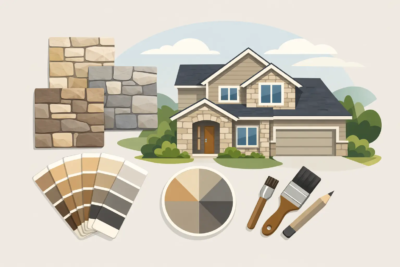
Color is usually the decision that determines whether a gable looks connected to the home or visually separate from it. Start with the fixed materials that are not likely to change soon: the roof, brick, windows, and mortar, if applicable. Then look at the siding and trim.
A reliable approach is to choose stone that repeats at least one undertone already present on the exterior. A gray roof may work with gray and taupe stone, but it can also work with a warm fieldstone blend that contains enough charcoal to tie the palette together. A brown roof often benefits from tan, buff, brown, and soft gray variation rather than stone that reads orange or red from the street.
Avoid trying to match the siding exactly. Stone should provide contrast and depth. On a light-colored home, medium-tone stone usually gives the gable enough definition. On a darker facade, a lighter blend may create an attractive focal point, provided it still relates to the roof and trim.
It also helps to view samples outdoors at different times of day. Morning shade, direct afternoon sun, and overcast weather can all change how a blend reads. A stone that looks pale in a showroom may look considerably richer once installed high on a sunlit gable.
Match the Stone Scale to the Gable Size
The best stone profile for a gable should be proportionate to the feature itself. A wide two-story gable can support bolder fieldstone or larger cut stone. A smaller dormer gable often benefits from a more consistent, moderately sized profile that will not look overly busy.
Roof pitch matters as well. A steep triangular gable narrows quickly toward the peak, which means installation involves more angled cuts near the top. Profiles with extreme variation may look less orderly in this tight area. Cut stone, ledgestone, and stack stone can provide a cleaner finish on steep peaks, while fieldstone may be better suited to broader triangular faces.
Think beyond the gable alone. If stone is planned for a chimney, front porch, garage bump-out, or foundation, the gable should use the same profile and blend. Repeating materials creates a deliberate whole-house design. Mixing multiple stone styles on the front of one home often makes each feature compete for attention.
Details That Make a Stone Gable Look Finished
Good stone selection is only part of the result. The edge conditions around the gable determine whether the installation looks polished. Trim boards, siding transitions, soffits, and roof intersections all need a clear plan before veneer is installed.
For some homes, crisp painted trim framing the stone creates an appealing contrast. For others, allowing the stone to meet a clean roofline or adjacent siding produces a more continuous appearance. The right approach depends on the architectural style and the existing exterior details.
Coordinated accents can carry the stone choice through the property without covering every surface. A matching mailbox column, address numbers, wall cap, keystone, or porch pier cap can make a gable treatment feel connected to the entry and landscape. These details are most effective when used sparingly.
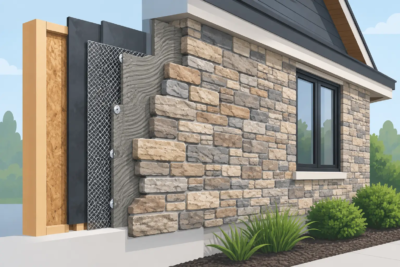
Installation quality matters just as much as profile selection. Exterior veneer needs proper substrate preparation, flashing, drainage details, and careful integration with roofing and siding. A well-planned installation protects the home while preserving the clean lines that make the stone work visually.
When Less Stone Creates a Better Facade
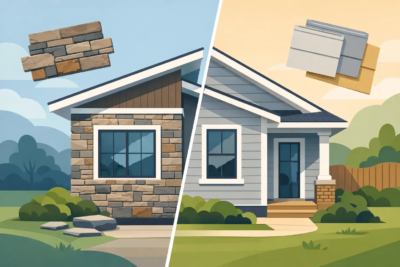
A stone gable does not need to be paired with stone everywhere. In fact, one well-proportioned gable can be the focal point that gives a home curb appeal without adding unnecessary weight to the facade. This is especially true for homes with attractive siding, large windows, or a strong front entry that should remain visible.
For a more substantial new-build look, stone can be repeated at the lower portions of porch columns or around a chimney. For a targeted renovation, the gable may stand on its own. The right scope depends on the home’s proportions, the budget, and how much of a transformation the exterior needs.
Grizzly Stone helps homeowners and building professionals choose manufactured veneer profiles and finishing details that suit the home rather than forcing a one-size-fits-all look. A sample viewed beside your siding, roof, and trim will tell you more than a photo ever can.
A gable may be a relatively small part of the house, but it has a large role in how the home is remembered. Choose a stone profile with enough character to be seen from the street, enough restraint to support the architecture, and a color blend that makes the whole exterior feel like it was meant to be there.