
A home does not need a full stone façade to make a lasting first impression. The right fieldstone veneer can give a plain entry, chimney, foundation, or gable the texture and depth that makes the entire exterior feel more grounded. For Shenandoah Valley homeowners, it is a natural fit: fieldstone brings an established, enduring character that complements wooded lots, rolling farmland, historic towns, and newer neighborhoods alike.
Fieldstone is especially effective because it looks collected rather than manufactured. Its irregular shapes, varied sizes, and layered color movement create a wall with visual history. Whether the goal is to update a dated brick ranch, finish a custom new build, or give a front entry more presence, the best results come from choosing the right scale, color blend, and application for the house.
What Makes Fieldstone Veneer Different?
Fieldstone veneer is designed to reflect the look of naturally weathered fieldstone: rounded or irregular pieces with a relaxed, organic arrangement. Compared with a more linear ledge stone or the crisp geometry of cut stone, fieldstone feels less formal. It has movement, shadow, and variation that keep a large wall from appearing flat.
Manufactured veneer offers that character without requiring the structural support and added weight of full-bed natural stone. It can be used across many exterior and interior applications when it is properly installed over a suitable wall system. For homeowners planning a renovation, that flexibility opens up more design possibilities without asking the entire project to become a major masonry rebuild.
The profile is not the only decision. Mortar color, joint depth, and the mix of stone sizes all affect the finished appearance. A lighter mortar can emphasize each individual stone, while a deeper or more closely matched mortar allows the face of the stone to lead. Neither approach is automatically better. The right choice depends on whether the home calls for a clean, tailored finish or a more rustic, old-world look.
Where Fieldstone Veneer Has the Most Impact
Fieldstone does its best work where a home needs visual weight or a clear focal point. A carefully selected application can make an entry easier to notice, help a chimney feel proportional to the roofline, or give a simple elevation a stronger sense of permanence.
Front entries and columns
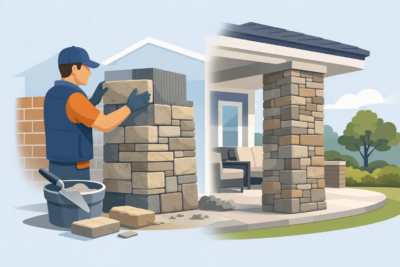
The front door is often the most valuable place to add stone because it is where visitors experience the home up close. Veneer on porch columns, a low entry wall, or the wall surrounding the door can frame the entrance without overwhelming the exterior. On a house with siding, fieldstone can also provide a welcome material contrast, especially when the stone colors connect to the roof, shutters, or front door.
Scale matters here. Narrow columns can look crowded with an oversized stone profile, while broad porch piers can support a more substantial fieldstone pattern. Matching pier caps or wall caps give the work a finished edge and prevent the project from looking like an afterthought.
Chimneys and fireplace features
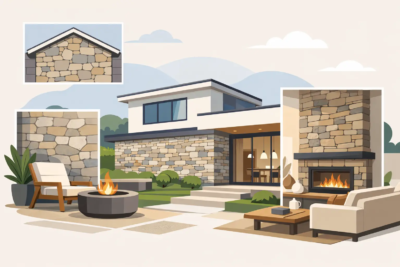
A chimney is a natural home for fieldstone because it already has the vertical mass to carry a textured material. Stone can turn a plain framed chimney chase into a defining architectural feature, whether it extends from grade to roofline or is used as a focused accent around the lower portion.
Inside, a fieldstone fireplace surround brings warmth to a family room, basement, or gathering space. The irregular shapes can soften a room filled with straight cabinetry, smooth drywall, and rectangular windows. For interior projects, homeowners often prefer a color blend that works with flooring and furnishings rather than simply matching the exterior stone exactly.
Foundations, wainscot walls, and lower-level accents
A visible concrete foundation can pull attention away from an otherwise attractive home. Applying veneer to the lower portion of the house creates a more complete transition from grade to siding or brick. This wainscot-style use is also a practical way to gain the character of stone without covering an entire elevation.
The key is proportion. A low band of stone should align with the architecture of the home, not stop at an arbitrary height. Window sills, porch floors, and horizontal trim lines often provide useful visual reference points. When the stone wraps a corner or continues along an adjoining wall, the transition should feel intentional from every common viewing angle.
Outdoor living areas
Fieldstone veneer can carry the home’s exterior character into patios, outdoor kitchens, retaining features, and seating walls. Used selectively, it connects these spaces to the house rather than making them appear like separate projects completed years apart.
Because outdoor surfaces face rain, temperature swings, and seasonal moisture, the installation details matter as much as the appearance. Proper flashing, drainage, substrate preparation, and mortar work are essential in the Shenandoah Valley climate. A beautiful stone profile cannot compensate for shortcuts behind the wall.
Choosing a Color Blend That Belongs on Your Home
The most successful stone selections do not compete with the rest of the exterior. They pull the house together. Before settling on fieldstone veneer, look at the fixed colors already in place: roofing, brick, siding, window trim, gutters, and hardscape. These elements will remain long after paint colors or furniture change.
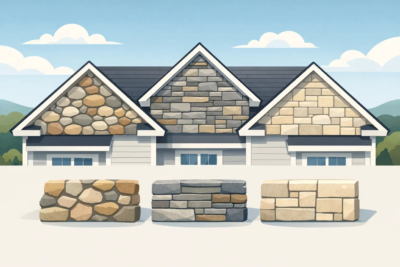
Warm blends with tans, soft browns, and muted grays often complement traditional homes and natural settings. Cooler gray blends can suit more contemporary siding colors, black window frames, or charcoal roofs. A blend with several undertones is usually more forgiving than a stone that reads as one flat color, particularly on large exterior walls where sunlight changes throughout the day.
Samples should be viewed outside, not only in a showroom or on a screen. Morning sun, shade beneath a porch, and late-afternoon light can each reveal different tones. It is also wise to view the sample beside the siding, trim, and roof materials rather than evaluating the stone by itself.
Plan the Full Composition, Not Just the Stone
Stone veneer is more convincing when it is part of a complete composition. That does not mean every project needs elaborate details. It means the transitions and finishing pieces deserve the same attention as the fieldstone itself.
For example, a stone column may need a cap that gives it a clean visual endpoint. A front entry can benefit from coordinated address numbers set into the stone rather than added later as a separate accessory. Keystones can bring definition to an arched opening, while matching wall and pier caps help landscape features relate to the house.
These details are particularly valuable on new construction, where material selections can be coordinated early. They also improve renovation work, where a new stone accent needs to look as though it always belonged to the home. Grizzly Stone helps homeowners and building professionals consider these pieces together so the finished project feels resolved, not pieced together.
Common Mistakes to Avoid With Fieldstone Veneer
The most common design mistake is using stone everywhere simply because it looks good in a sample. Fieldstone has a strong visual presence. Covering every available wall can make a home feel heavy, especially when the roofline is low or the lot is small. A chimney, entry, foundation band, or one prominent gable may deliver more impact than a full façade.
Another mistake is ignoring the scale of the house. Larger fieldstone pieces can look handsome on a broad two-story elevation, but may overpower a compact ranch or narrow porch. Conversely, a very small profile may get lost on a large home with tall walls and expansive roof planes.
Finally, do not treat installation as a place to cut corners. Exterior veneer needs appropriate preparation, moisture management, and experienced application. Builders and masons know that the work behind the stone protects the work everyone sees. A properly planned installation helps the finished surface continue to look right through years of changing weather.
A Stone Choice That Grows With the Home
Fieldstone veneer is not a passing color trend or a quick cosmetic cover-up. It is a material choice that can make a home feel more settled in its setting, more intentional at the curb, and more enjoyable to come home to. Start with the wall or feature that deserves attention most, then build the design outward with colors, proportions, and finishing details that give the stone a lasting place on the home.