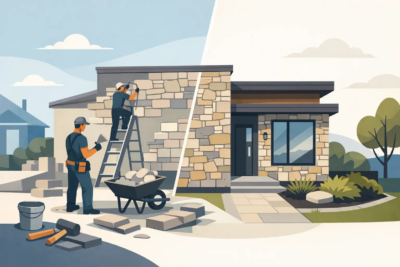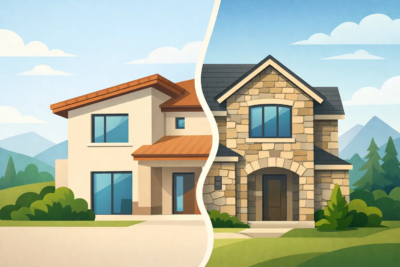

A front entry can have beautiful stone, a carefully selected door, and well-proportioned trim, yet still feel unfinished at the top of an arch. An architectural keystone for stone arch work solves that small but visible problem. Set at the crown of the arch, it creates a natural focal point, gives the opening a finished edge, and adds the kind of architectural character that makes a house feel intentionally designed.
For Shenandoah Valley homes, a keystone works especially well on arched doorways, garage openings, windows, covered porches, chimneys, and garden features. It can suggest the permanence of traditional masonry while complementing the practical advantages and broad design range of manufactured stone veneer. The best choice is not simply the largest or boldest piece. It is the one that belongs with the stone profile, the scale of the opening, and the style of the home.
What an Architectural Keystone Does
In a traditional load-bearing masonry arch, the keystone is the wedge-shaped stone placed at the very top. It helps transfer pressure through the surrounding stones, known as voussoirs, and locks the arch into place. That structural history is why the detail has remained so recognizable for centuries.
On most veneer projects, however, an architectural keystone is a finishing component rather than the piece carrying the weight of the wall. Its role is visual, but that does not make it secondary. It establishes the centerline of the arch and gives the eye a place to land. Without it, an arched stone surround can appear to stop rather than resolve.
This distinction matters when planning the project. A decorative veneer keystone should be selected and installed as part of the veneer system. If an opening requires a true structural arch, lintel, or engineered support, that work must be designed by the appropriate building professional before the stone veneer and finishing details are installed.
Choose the Right Keystone for the Arch
A keystone should look like it was made for the opening, not added after the fact. Size, profile, color, and projection all influence whether the finished arch feels balanced.
Start With the Scale of the Opening
The width and height of the arch should guide the size of the keystone. A modest keystone can get lost above a wide garage arch or a tall entry. Conversely, an oversized piece can overpower a narrow window or small garden gate.
As a visual rule, the keystone should read clearly from the normal viewing distance without becoming the only feature anyone sees. Stand back at the curb or driveway, not just at arm’s length. From that perspective, the component needs enough presence to define the crown of the arch and relate to the field of stone around it.
For a broad opening, a more substantial keystone profile may be appropriate. For smaller arches, a cleaner, lower-profile piece often delivers a better result. The answer depends on the proportions of the home, nearby trim, and how much stone is used elsewhere on the facade.
Match the Stone Profile Before the Color
Color is often the first thing homeowners notice, but profile is usually what makes a keystone look convincing. A rugged fieldstone veneer pairs naturally with a keystone that has depth, irregular texture, and a substantial face. A clean cut stone installation may call for sharper edges and a more tailored appearance. Ledge stone and stack stone designs tend to look best with a detail that respects their horizontal rhythm rather than interrupting it with an overly formal shape.
The keystone does not need to disappear into the surrounding stone. In fact, a slight contrast can give the arch definition. What matters is that the texture and visual weight feel related. A smooth, highly refined keystone set into heavily textured, rustic stone can look disconnected, even when the colors are close.
Use Contrast With Restraint
A keystone can match the dominant color in the wall, pick up a secondary tone, or provide a subtle accent. Each approach produces a different effect.
Matching the field stone creates a quiet, cohesive appearance. Drawing from a secondary color can make the arch more readable while still feeling coordinated. A lighter or darker accent creates the strongest focal point, which can be effective at a front door or prominent chimney but may be too pronounced on a smaller opening.
Look at the project as a whole. The roof color, shutters, entry door, window trim, porch columns, and foundation all affect how a stone color will read. Samples viewed in direct sunlight, shade, and evening light give a more dependable picture than a quick decision made indoors.
Designing the Arch Around the Keystone
The cleanest installations are planned from the top down. The keystone sets the center of the composition, and the surrounding arch stones are adjusted to meet it evenly on both sides. Trying to insert a keystone after the arch has already been laid can force awkward joints, uneven spacing, or excessive cuts.
A centered keystone is essential. Even a slight shift becomes noticeable because the eye naturally expects symmetry at the crown of an arch. The surrounding stones should also have a consistent visual rhythm. They do not need to be identical, particularly with a more rustic stone profile, but the left and right sides should carry similar weight and spacing.
Pay attention to the transition between the arch and the vertical legs below it. The stonework should appear to support the curve rather than merely outline it. This is especially important around doors and garage openings, where straight joints, trim lines, and siding can make inconsistencies easy to spot.
Consider Projection and Shadow Lines
A keystone with more projection than the surrounding veneer creates a shadow line that gives the opening depth. That added dimension can be striking on a large facade or a recessed entry. It can also become too busy if the wall already includes heavy trim, shutters, columns, and multiple changes in material.
For homes with a restrained exterior design, modest projection often provides enough definition. More elaborate homes can support a bolder keystone and a more pronounced arch surround. Neither approach is automatically better. The goal is to create a feature that fits the home rather than competing with it.
Where Keystone Details Have the Most Impact
A front entry is the classic location because it turns an ordinary doorway into a clear point of arrival. On a stone veneer facade, a keystone can tie the entry to a chimney, foundation accent, or porch column and make the entire elevation feel more unified.
Garage arches also benefit from careful detailing, particularly when the garage faces the street. Because these openings are wide, they need a keystone with enough visual presence to hold the center of the arch. A well-scaled component can keep the garage from reading as a large blank expanse.
Window surrounds, outdoor kitchens, fireplace faces, retaining-wall features, and garden gates are other opportunities. In these areas, restraint matters. A keystone is most effective when it reinforces a meaningful arch, not when it is repeated so often that the detail loses its purpose.
Installation Details That Protect the Finished Look
A good design needs sound preparation. Veneer stone and architectural components should be installed over a properly prepared substrate using the correct weather-resistive barrier, drainage plane, lath or approved backing system, mortar, and flashing details for the application. Exterior conditions, wall construction, and local code requirements all influence the right approach.
The keystone should be securely bedded and aligned before the surrounding joints are finished. Mortar joints need to support the intended appearance of the stone profile, whether that means a fuller, rustic joint or a tighter, more tailored look. Rushing this stage can leave mortar smears, uneven joint widths, or a crown that looks off-center from the driveway.
Water management deserves particular attention above exterior openings. A beautiful stone arch will not compensate for missing or improperly integrated flashing. Builders and masons should coordinate the veneer work with the opening, trim, roofline, and drainage details so moisture is directed away from the wall assembly.
A Small Detail With a Lasting Effect
Architectural finishing pieces are often what separate a collection of good materials from a complete exterior design. When the keystone, veneer profile, caps, and other accents share a common visual language, the home gains depth and character without feeling overdesigned.
Grizzly Stone helps homeowners and construction professionals select stone veneer and coordinated architectural details that suit the project, from a focused entry upgrade to a full facade renovation. A thoughtfully chosen keystone can be the final piece that makes an arch look settled, balanced, and built to belong there for years to come.