
A home can feel unfinished for one simple reason: its materials stop short of telling a complete architectural story. That is the real decision behind stone wainscoting versus full facade. Both can add texture, permanence, and regional character to a Shenandoah Valley home, but they create very different visual weight, budgets, and installation scopes.
For some homes, a carefully proportioned stone base is all that is needed to ground the design. For others, a full stone front is the feature that turns a standard elevation into a home with presence. The right answer depends less on which option is “better” and more on the style of the house, its setting, and what you want people to notice first.
Stone Wainscoting Versus Full Facade: The Visual Difference
Stone wainscoting covers the lower portion of an exterior wall, generally from the foundation up to the sill line, porch rail, or another intentional horizontal break. It is often used along the front elevation, around a walkout basement, on a foundation wall, or beneath siding. The result is a strong base that gives the home depth without covering every surface in stone.
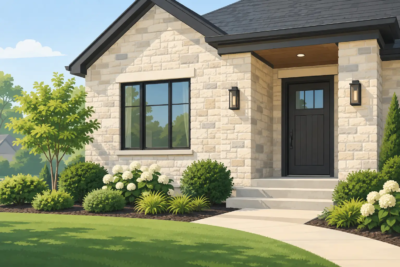
A full facade uses stone veneer across an entire wall or a major front-facing section of the home. It can frame the entry, cover a two-story gable, define a front elevation, or extend across the entire face of the house. This approach gives stone a leading role rather than treating it as an accent.
The difference is immediately visible from the street. Wainscoting tends to make a home feel settled, balanced, and well-finished. A full facade makes a stronger architectural statement, especially on homes with broad front elevations, prominent entries, or designs influenced by farmhouse, traditional, mountain, or craftsman styles.
Neither approach needs to look heavy. Color selection, stone profile, mortar treatment, and the amount of surrounding siding or trim all affect the final result. A light fieldstone can feel open and classic across a full facade, while a dark stacked stone may be more effective as a defined accent at the base, entry, or chimney.
When Stone Wainscoting Makes the Most Sense
Wainscoting is a practical choice when the home already has a strong exterior material palette. If siding, brick, board-and-batten, or stucco is in good condition and fits the architecture, stone can provide the missing visual anchor without competing with it.
It is especially effective on homes where the foundation is highly visible. Sloped lots are common throughout the Valley, and exposed foundation walls can make an otherwise attractive house appear unfinished. Covering that lower section with veneer stone turns a functional necessity into a deliberate design feature.
This option also works well for homeowners planning a focused exterior renovation. You may want to improve curb appeal before selling, refresh a dated ranch-style home, or add definition to a new build without expanding the project across the entire front elevation. Stone wainscoting can create that transformation while keeping the work targeted.
A few design details matter here. The top edge of the stone should land at a natural break in the architecture, such as a porch line, window sill, belt course, or transition in siding. Stopping stone at an arbitrary height can make it look applied rather than integrated. Corners, door surrounds, and porch columns should also be considered early so the stone reads as part of one cohesive plan.
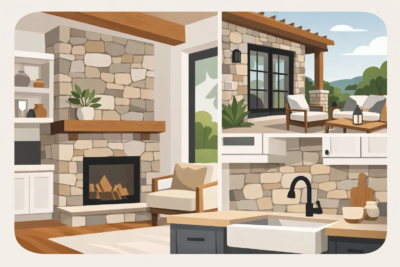
Wainscoting pairs naturally with stone columns, porch piers, chimney veneer, and coordinating caps. These details repeat the material in the right places and prevent the lower stone band from feeling isolated.
When a Full Stone Facade Is Worth It
A full facade is often the right move when the existing exterior lacks a clear focal point. Many newer homes have large, flat front elevations with limited material variation. Covering a key section in stone can add shadow lines, scale, and craftsmanship that siding alone may not provide.
It is also a strong choice for homes with a central entry, a front-facing garage that needs visual balance, or a two-story wall that appears oversized. Stone breaks up broad planes and draws attention toward the parts of the house that deserve emphasis. On a home with a prominent gable, full veneer can make that feature feel intentional rather than empty.
The investment is larger because more wall area requires more material, labor, flashing, preparation, and finishing work. Yet the return is not only about square footage. A well-designed full facade can give a home a more substantial appearance, particularly when the stone profile and colors fit the setting.
In the Shenandoah Valley, natural-looking profiles such as field stone, ledge stone, and cut stone often complement the region’s wooded properties, rolling terrain, and established neighborhoods. The goal is not to make every house look rustic. A cleaner-cut stone in a controlled color blend can feel refined and tailored, while irregular fieldstone can bring warmth to a home that needs a more relaxed, grounded character.
A full facade demands restraint in other areas. If stone covers a large portion of the front, trim colors, shutters, roofing, and landscaping should support it rather than add more competing texture. Often, simpler landscaping and a thoughtful entry door color do more for the finished result than additional ornament.
Cost, Installation, and Long-Term Planning
Budget is a legitimate deciding factor, but it should be considered alongside the life of the project. Stone wainscoting generally requires less material and less installation time than a full facade, making it a more accessible way to introduce veneer stone. It can also be completed in phases, with a foundation upgrade first and columns, a chimney, or an entry accent added later.
A full facade has a higher initial cost, but it may make sense during new construction or a major remodel, when exterior walls are already being prepared and several trades are on site. It can also be more economical than trying to add disconnected stone features over several years without a unified design plan.
Installation quality matters with either choice. Manufactured veneer stone is lighter than full-bed natural stone, but it still requires correct surface preparation, water management, flashing, lath where needed, mortar application, and properly detailed transitions. The best-looking stone cannot overcome poor substrate preparation or awkward terminations around windows, doors, and corners.
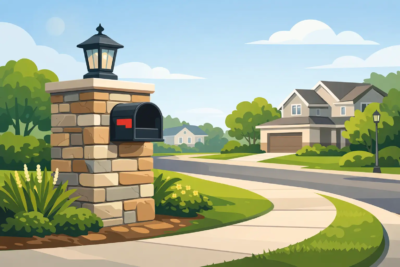
Think ahead about additions and improvements, too. If you expect to add a covered porch, new front steps, retaining walls, or outdoor living areas, choose a stone profile and color blend that can carry through those future projects. Coordinated wall caps, pier caps, keystones, and address numbers can make separate improvements feel like one finished property.
Matching Stone to Your Home’s Architecture
The profile should follow the home, not a passing trend. Ledge stone and stack stone create horizontal movement that works beautifully on contemporary homes, low ranches, and clean-lined entries. Cut stone can bring a more formal, dimensional look to traditional homes. Fieldstone offers a softer, more natural pattern that suits farmhouses, wooded lots, and homes seeking a classic Valley character.
Color deserves the same attention. Gray and charcoal blends can sharpen white, black, and cool-toned exteriors. Warm browns, tans, and buff tones often pair well with cream siding, bronze roofing, and natural wood elements. Mixed blends can connect several exterior colors, but too many competing tones can make the facade feel busy.
Before finalizing the coverage area, view sample stone in outdoor light beside the siding, roof, brick, and trim. Morning shade, afternoon sun, and wet weather can all change how a color blend reads. This is one reason a custom, project-specific selection process is more valuable than choosing stone from a small image alone.
A Better Way to Make the Decision
Start by standing across the street from your home. Look for the areas that feel visually weak: an exposed foundation, an oversized blank wall, an entry without definition, or a garage that dominates the front elevation. Wainscoting is often the answer when the home needs grounding. A full facade is often the answer when the home needs a stronger identity.
Then consider proportion. A modest home can look elegant with a stone base and matching porch piers. A larger home may need a more substantial stone area to avoid looking top-heavy or disconnected. The best exterior designs repeat materials with purpose rather than applying them everywhere.
Grizzly Stone helps homeowners and building professionals select veneer profiles and finishing components that fit the house, the site, and the scope of the project. Whether the plan is a focused foundation upgrade or a dramatic new front elevation, the most successful work begins with a clear view of the finished home.
Choose the amount of stone that gives your house confidence without taking away its character. When the proportions are right, stone does more than cover a wall – it makes the whole home feel built to belong there.