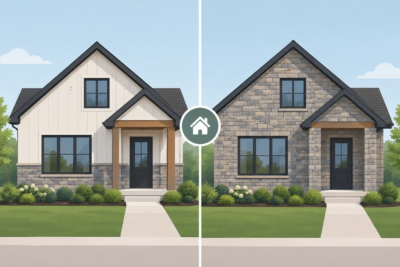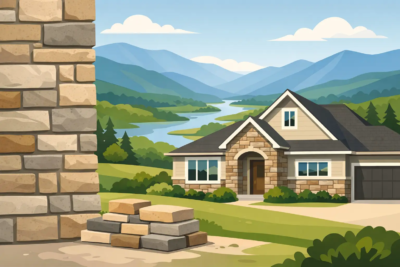

A front elevation can have good proportions, a fresh roof, and well-kept landscaping yet still feel unfinished. Often, the missing element is material depth at the entry, foundation, chimney, or gable. Limestone veneer stone gives a home that depth with a look that is tailored, established, and naturally at home across the Shenandoah Valley.
For homeowners planning a renovation or builders finishing a new home, limestone-inspired veneer offers more than a color choice. Its clean edges, quiet texture, and balanced range of tones can bring the entire exterior into focus. The right selection can make a modest porch feel intentional, give a chimney real presence, or connect a new addition to the original house.
Why Limestone Veneer Stone Has Such Broad Appeal
Limestone has long been valued for its calm, architectural character. It does not depend on dramatic color variation or heavy surface movement to make an impression. Instead, it brings a sense of permanence through soft neutrals, squared shapes, and a texture that reads as refined from the street and inviting up close.
Manufactured limestone veneer stone recreates that character in a format suited to many residential applications. It can be used on full façades or in carefully chosen areas where stone will have the greatest visual impact. A light limestone profile can sharpen the lines of a traditional Colonial home, while warmer buff and sand tones can complement Craftsman, farmhouse, and transitional designs.
Its versatility is especially useful in the Shenandoah Valley, where homes range from older brick properties and rural farmhouses to new construction in growing neighborhoods. The goal is not to force one architectural style onto every house. It is to choose a stone profile, color blend, and layout that make the home look like it belongs on its site.
Where Limestone Veneer Stone Makes the Biggest Difference
A full stone front creates a strong statement, but it is not the only way to use veneer effectively. In many projects, targeted stonework creates a more balanced result and keeps the investment focused on the areas people notice first.
Front entries and porch walls
The entry is where guests experience the home at close range. Limestone veneer on porch piers, low walls, or the wall surrounding a front door adds texture beneath trim, siding, or painted brick. It also gives homeowners an opportunity to coordinate lighting, door color, columns, and house numbers with the stone rather than treating each element as a separate decision.
For a tall two-story façade, stone at the entry can help ground the elevation. For a lower ranch-style home, a horizontal ledge-style or cut-stone look can reinforce the home’s natural width without making it feel heavy.
Chimneys and fireplaces
A chimney is one of the most natural places for stone, whether it stands outside as a focal point or rises through the middle of a great room. Limestone-inspired veneer gives a chimney a substantial appearance without the rough, irregular look of some fieldstone profiles. It works well when the rest of the home calls for a cleaner, more architectural finish.
Indoors, a limestone veneer fireplace can set the direction for the entire room. Lighter tones pair easily with white oak, black metal, natural wood mantels, and painted cabinetry. Deeper gray or taupe blends can create contrast in rooms with light walls and simple furnishings. The decision depends on whether the fireplace should quietly support the room or serve as its strongest visual feature.
Foundations, bump-outs, and garage accents
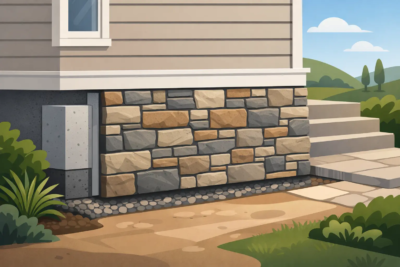
Stone along a foundation can give a home a more finished transition to the landscape, particularly where siding would otherwise run close to grade. It is also useful for bump-outs, garage walls, and lower-level areas that need more visual weight.
The key is proportion. A narrow band of stone may look disconnected on a tall façade, while too much stone on a small home can overwhelm windows and trim. Looking at the entire elevation before choosing coverage helps determine where the stone belongs and how high it should run.
Columns, retaining features, and exterior details
Columns wrapped in limestone veneer can turn a basic porch into a more defined architectural feature. On the landscape side, coordinated wall caps and pier caps can extend the stone look to entry walls, mailbox posts, or outdoor living areas. These details matter because they repeat the same material language from the house to the property edge.
Choosing the Right Color, Profile, and Joint Treatment
Limestone is often described as neutral, but neutral does not mean one-color-fits-all. A blend with creamy whites and soft tan notes may be right for warm siding, brown roofing, and natural wood. A cooler gray limestone selection may better support black windows, slate-colored roofing, or a contemporary exterior palette.
Bring the fixed elements into the decision early. Roof color, brick, siding, window frames, mortar, driveway concrete, and hardscape all affect how stone will read. A sample viewed under showroom lighting can look different outside in morning sun, shade, or after rain. Reviewing the stone against the home itself is the most reliable way to avoid a selection that feels too yellow, too gray, or too busy once installed.
Profile matters as much as color. Cut stone profiles tend to feel orderly and tailored, making them a strong fit for traditional and transitional homes. A ledge-style profile emphasizes horizontal movement and can suit low, wide elevations. Fieldstone carries a more rustic, irregular character. Stack stone has a crisp, layered look that often works best as an accent rather than as the dominant material on every wall.
Mortar joints also change the final appearance. A more visible joint creates definition between individual stones and can make the installation feel more traditional. A tighter, more recessed joint lets the face of the stone carry the design. There is no universal best choice, but it should be made with the home’s style in mind rather than treated as an afterthought.
Plan Stonework as Part of the Whole Design
The strongest veneer projects are planned as complete compositions. That means deciding how stone meets siding or brick, where corners begin and end, how it relates to windows, and what will finish the top and edges of the installation. Without that planning, even attractive stone can look applied rather than built into the home.
Architectural accessories help resolve those transitions. Keystones can add emphasis over openings. Wall caps and pier caps provide a clean finish to freestanding features. Coordinated street numbers can carry the same level of detail to the front of the property. These are small choices, but they prevent the familiar problem of a finished stone wall with no satisfying final edge.
This is also where practical installation planning matters. Veneer should be installed over a properly prepared substrate with appropriate flashing, moisture management, and detailing at windows, doors, roofs, and grade transitions. On exterior projects, a qualified installer understands that water handling is as important as visible craftsmanship. A beautiful stone face is only successful when the wall behind it is protected.
For homeowners renovating an older property, the existing surface may influence the scope of the project. Brick, concrete block, framed walls, and previously finished surfaces can require different preparation. New construction usually offers more freedom to coordinate stone, trim, and siding from the beginning. In either case, an estimate based on actual measurements and site conditions is far more useful than choosing stone solely from a photo.
A Better Way to Start Your Selection
Begin with the part of the house you most want to improve. It may be a plain front entry, a dated chimney, a garage elevation that lacks detail, or an interior fireplace that needs a focal point. Then consider what the stone needs to accomplish: add warmth, create contrast, reinforce a traditional style, or give a newer home more character.
From there, narrow the choice by profile and color, not by color alone. Compare options against the permanent materials already on the property. Think about where the eye lands when someone approaches from the driveway and what details will carry the design through the rest of the project. Grizzly Stone helps homeowners and building professionals make those decisions with custom-made veneer options and finishing pieces that belong together.
A well-chosen limestone veneer installation should not feel like an accessory added at the end. It should make the porch, chimney, fireplace, or façade feel as though it was always meant to be there – a durable piece of craftsmanship that gives the home a stronger first impression every day.