
A front entry can tell two very different stories. One may feel like an afterthought, with a blank wall, undersized columns, and materials that never quite connect. The other feels grounded from the curb, with color, texture, and architectural details working together. This home exterior material guide helps Virginia homeowners make choices that serve both the house and the life happening around it.
The right exterior is rarely about selecting one “best” material. It is about choosing materials that suit your home’s style, its exposure to weather, the scope of the project, and the visual impression you want to create. A full façade renovation calls for a different approach than a chimney remodel, foundation upgrade, or new front porch.
Home Exterior Material Guide: Start With the House
Before comparing samples, look at the permanent features already in place: roof color, window trim, driveway, landscaping, and the home’s proportions. These elements set the direction. A warm brown roof may support buff, tan, and earth-toned stone. A charcoal roof can pair beautifully with gray, cream, or mixed-color veneer. The goal is not perfect matching. It is a coordinated palette with enough contrast to give the home dimension.
Architectural style matters, too. A traditional Shenandoah Valley home may call for field stone at the foundation, chimney, or entry. A newer build can gain crisp definition from ledge stone or stack stone veneer. Cut stone often brings a more tailored appearance to columns, retaining walls, and formal elevations.
Consider where the eye naturally lands when someone approaches the property. On many homes, that is the front door, the garage, the chimney, or the broad wall above the foundation. A material decision carries more weight in these high-visibility locations than it does on a secondary side wall.
Compare the Major Exterior Materials
Each exterior material offers a different balance of cost, maintenance, durability, and character. The best choice depends on the project rather than a universal ranking.
Vinyl siding
Vinyl siding remains common because it is economical, available in many colors, and relatively low maintenance. It works well across large wall areas and can be a sensible choice for practical renovations or budget-conscious new construction.
Its limitation is visual depth. On a prominent front elevation, vinyl alone can sometimes leave a home feeling flat. Pairing it with a stone veneer wainscot, entry surround, column bases, or chimney can add the weight and texture that siding cannot provide on its own.
Fiber cement siding
Fiber cement can offer a more substantial look than vinyl, especially in lap siding, board-and-batten, and panel applications. It accepts paint well and fits many home styles, from farmhouse-inspired designs to cleaner contemporary exteriors.
It does require proper installation and periodic repainting or touch-ups over its service life. For homeowners who want siding as the primary field material but still want a crafted focal point, stone veneer creates a strong complement around lower walls, entries, and architectural projections.
Brick
Brick has longstanding appeal in Virginia for its familiar, durable appearance. It can feel formal, traditional, and enduring, particularly on Colonial-style and established neighborhood homes. Brick also offers a strong sense of permanence when used across an entire façade.
The trade-off is that a full brick exterior may be more expensive and less flexible in appearance once installed. For a remodel, matching older brick can also be difficult. Veneer stone provides another way to introduce natural-looking texture and color without trying to force a brick match.
Natural stone
Natural stone is distinctive, with real variation in color, shape, and texture. It can be an excellent material for projects where a specific local or historic character is the priority. It is also heavy, and installation requirements can affect labor, structure, and budget.
For many residential upgrades, manufactured stone veneer delivers a comparable architectural effect with more predictable profiles, manageable weight, and broader design control. It is especially useful when a homeowner wants the look of stone on a chimney, front façade, porch, or interior feature without rebuilding the wall system around full-bed stone.
Manufactured stone veneer
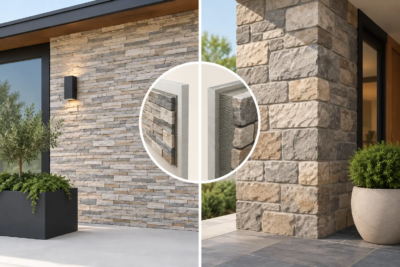
Manufactured stone veneer is designed to create the character of stone while giving homeowners options in profile, color, and application. Field stone brings a relaxed, natural appearance. Ledge stone creates horizontal movement and works well on modern rustic or mountain-inspired homes. Stack stone offers clean lines for columns, accents, and contemporary details. Cut stone can give an entry or façade a more formal, finished look.
Veneer stone is not a shortcut for poor design. The strongest results come from selecting the right profile for the home, using it in intentional locations, and finishing transitions carefully. When it is treated as part of the architecture rather than decorative patchwork, it can turn an ordinary exterior into a place with real presence.
Choose Stone Placement With Purpose
A little stone can go a long way when it is placed where it has architectural reason to be. A foundation wainscot helps visually anchor a tall-sided home. Stone on a chimney emphasizes one of the home’s most vertical, visible elements. Stone columns can make a modest porch feel more substantial and welcoming.
Full front elevations can also work beautifully, but scale matters. A small stone profile on a large two-story wall may look busy from the street. A larger field stone or cut stone profile may better suit the home’s mass. Conversely, a heavy, oversized profile can overwhelm a compact ranch or cottage.
Think beyond the front wall. A stone-wrapped outdoor kitchen, retaining wall, mailbox column, or garden wall can extend the home’s materials into the landscape. That connection is especially effective when the same stone profile appears at the foundation or front entry.
Do Not Treat Finishing Pieces as an Afterthought
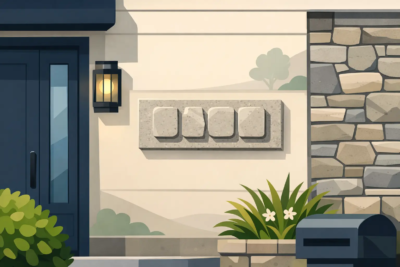
The details around the stone often determine whether a project looks complete. Wall caps, pier caps, keystones, and coordinated street numbers give a finished installation clear edges and intentional transitions. They also solve practical design questions, such as how to cap a column, finish a freestanding wall, or give an entry feature a focal point.
For example, a stone mailbox column without a properly sized cap can look unfinished. A porch pier with a cap that is too small can feel visually weak. These are small components, but they carry the same importance as trim around a window or a well-chosen light fixture at the front door.
Coordinating these pieces early prevents last-minute compromises. It also helps builders and homeowners keep color, texture, and proportions consistent across the project.
Plan for Climate, Maintenance, and Installation
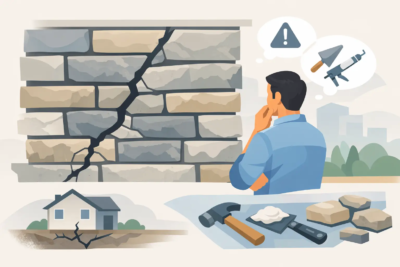
Virginia weather asks a lot of exterior materials. Seasonal moisture, freeze-thaw cycles, heat, and shade all affect how an exterior ages. Material selection should be paired with correct installation practices, including appropriate flashing, drainage, substrate preparation, and detailing around windows, doors, rooflines, and grade changes.
Stone veneer is durable, but it needs a properly prepared wall system and experienced installation. This is not the place to overlook transitions or rush the base of a wall. Water management behind the veneer matters as much as the appearance on the surface.
Maintenance is generally straightforward. Keep landscaping from pressing against the wall, avoid directing sprinklers at the veneer, and inspect for damage after severe weather or construction work nearby. If cleaning is needed, start gently and avoid aggressive pressure washing or harsh chemicals that could affect the surface or mortar joints.
Build a Cohesive Exterior, Not a Collection of Materials
The most successful homes usually limit the number of competing finishes. That does not mean every surface must match. It means each material should have a job. Siding can cover broad wall areas. Stone can anchor the house and highlight focal points. Trim can frame openings and sharpen contrast. Caps and keystones can give masonry features a deliberate finish.
A useful way to make decisions is to view material samples outdoors at different times of day. Morning light, afternoon sun, shade, and wet weather can all change how a color reads. Hold samples near the roof, trim, and brick or siding that will remain. A choice that looks right under showroom lighting may feel entirely different on the home.
For homeowners planning a renovation or new build in the Shenandoah Valley, Grizzly Stone can help translate a general idea into a stone profile and coordinated finishing approach that fits the project. The best exterior decisions do more than improve curb appeal for a season. They give the home a sense of permanence, proportion, and character every time you pull into the driveway.