
A low, wide ranch house can feel plain from the street even when it is well cared for. Its long roofline, simple façade, and broad front wall leave little room for architectural distraction. A thoughtful ranch home exterior transformation changes that equation by adding depth, texture, and stronger visual anchors without losing the practical character that makes ranch homes so livable.
For homeowners across the Shenandoah Valley, the best updates do not try to force a ranch home into a completely different style. They build on its natural proportions. Stone veneer, a more intentional entry, coordinated trim, and properly scaled details can turn an ordinary exterior into a home with lasting presence.
Start With the Ranch Home’s Natural Proportions
Ranch homes are horizontal by design. That is their strength, but it can also make the front elevation look flat, especially when the exterior is finished in a single siding material and one consistent color. The goal is not to cover every surface with stone. It is to create contrast where the eye naturally lands.
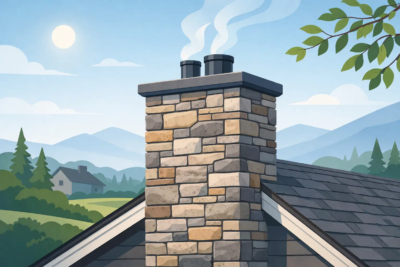
Look first at the front entry, garage wall, chimney, foundation, and any projecting section of the home. These are the areas that can carry more texture and visual weight. A stone veneer accent around the entry or along the lower portion of the façade gives the home a grounded appearance. Stone on a chimney can create a vertical focal point that balances a long, low roofline.
The right amount depends on the home. A compact brick ranch may only need a refreshed entry surround and stone columns. A larger ranch with a prominent garage may benefit from veneer across a wider section of the front elevation. Restraint matters. When stone is used with purpose, it looks integrated into the architecture rather than added as an afterthought.
Use Stone Veneer to Add Depth, Not Just Color
Paint can change a ranch home quickly, but it cannot create the depth that real stone texture brings to an exterior. Manufactured veneer stone offers the visual character of natural stone while providing a practical option for renovations, new additions, chimney updates, and targeted curb-appeal projects.
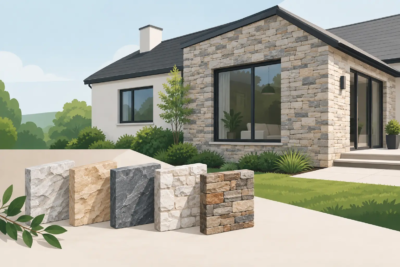
Each stone profile tells a different story. Field stone has an established, natural appearance that works well on traditional homes and wooded properties. Ledge stone creates longer horizontal lines that complement the shape of a ranch home. Stack stone offers a cleaner, more contemporary texture for homeowners who want a sharper, more tailored look. Cut stone can bring a refined, structured appearance to entrances, columns, and formal façades.
Color selection deserves just as much attention as profile selection. In the Shenandoah Valley, homes often sit against mountain views, mature trees, open fields, or historic neighborhoods. Earthy grays, warm browns, muted taupes, and blended tones tend to feel at home in these settings. A stone choice should work with the roof, siding, brick, shutters, and surrounding landscape instead of competing with them.
Choose a Clear Stone Application
A strong exterior usually has one primary stone application and a smaller supporting detail. For example, stone on the lower front façade can be paired with a matching chimney base. Stone entry columns can be echoed with coordinated wall caps. This repetition creates a finished look without making the home feel busy.
Avoid scattering unrelated stone accents across every surface. A small patch at the garage, another at the door, and a third around a distant window can make the exterior feel disconnected. A ranch home benefits from broad, confident decisions that respect its simple geometry.
Give the Entry a Stronger Sense of Arrival
Many original ranch homes have front doors that sit back under a shallow overhang, with little architectural definition around them. Improving the entry is often one of the highest-impact parts of a ranch home exterior transformation because it changes the experience of approaching the house.
A covered porch, stone-faced columns, or a defined portico can give the front door the presence it deserves. Even a modest entry can feel more substantial when stone veneer rises from the ground to support a roof element above. The effect is especially successful when the stone continues onto a nearby foundation wall or ties into a front walk.
Consider how the details meet. A finished stone column needs a properly scaled pier cap. A stone wall may benefit from a clean cap that creates a crisp transition to siding or trim. Architectural keystones can add distinction around openings when they fit the home’s style. Coordinated house numbers provide one final detail that feels intentional rather than incidental.
These finishing pieces are not decoration for decoration’s sake. They are what make an exterior project feel complete. The same principle applies to lighting, door hardware, and planters. Choose fewer elements, but choose them carefully.
Do Not Overlook the Chimney and Foundation
A dated chimney is often visible from the street long before guests reach the front door. If it is finished in faded siding, aging brick, or an unrelated material, it can weaken an otherwise updated exterior. Refacing a chimney with stone veneer creates a natural focal point and gives the entire home more architectural weight.
Foundation treatments can be equally effective. Exposed concrete or a narrow band of mismatched foundation material can make a home appear unfinished. A stone veneer wainscot, used in the right proportion, visually connects the house to the ground and adds a durable-looking base.
There is a trade-off to consider. A full foundation wrap can be beautiful on a home with enough wall height, but it may feel heavy on a very low ranch. In those cases, concentrate stone at the entry, chimney, or a projecting front section instead. The best design responds to what is already there.
Coordinate the Materials Around the Stone
Stone veneer looks its best when the surrounding materials support it. Before choosing a profile, take inventory of fixed elements that are expensive or impractical to replace. Roof color, window frames, brickwork, driveway tone, and existing hardscape all influence the final palette.
For a classic ranch exterior, warm stone paired with cream, soft white, or muted green siding can create a welcoming result. Charcoal roofing and dark window trim can support gray-toned stone for a more updated look. If the home has red brick that will remain, select a stone blend with compatible warm undertones rather than introducing a cool gray that clashes.
Landscaping should reinforce the new architecture. Low evergreen plantings, ornamental grasses, and layered shrubs can soften a stone base without hiding it. Walkways and front steps deserve attention too. A well-designed stone façade loses some of its impact if visitors approach it on a narrow, cracked path with no visual connection to the entry.
Plan the Project Before Materials Arrive
The most successful exterior renovations begin with a complete view of the façade, not a material sample held against one small wall. Stand across the street. Take photos in morning and afternoon light. Notice where the house feels longest, flattest, or most dated. Those observations will help determine where stone will do the most work.
It also helps to establish priorities. If the budget is focused, begin with the area visitors see first: the entry, front-facing chimney, or garage-side wall. A well-executed first phase can make a meaningful difference, and future work can build from the same stone profile and finish selections.
Homeowners and building professionals should also consider installation details early. Proper wall preparation, flashing, drainage, transitions, and caps are essential to a finished result that performs as well as it looks. Veneer stone is a visible investment, but its long-term appearance depends on craftsmanship behind the surface.
Grizzly Stone helps homeowners, builders, remodelers, and masons select manufactured veneer stone and coordinated architectural details for projects throughout the Shenandoah Valley. Seeing profiles together and considering them against the home’s existing materials makes it easier to move from an appealing idea to a cohesive exterior plan.
A ranch home does not need elaborate ornament to make an impression. Give its best features more definition, use stone where it creates genuine visual weight, and carry the same care through the caps, trim, and entry details. The result is a home that still feels true to its original design, only far more memorable from the curb.