
A stone fireplace surround can make a living room feel grounded and timeless. A stone chimney can give a new home the presence of a much older Virginia farmhouse. But when fire is part of the picture, appearance is only one consideration. Homeowners often ask, is stone veneer fireproof? The short answer is that manufactured stone veneer is generally noncombustible, but the complete wall or fireplace assembly must be designed and installed for heat exposure.
That distinction matters. Stone veneer can be an excellent finish around a properly built fireplace, chimney, or outdoor fire feature. It is not, however, a substitute for the required firebox, chimney system, hearth clearances, heat shielding, or code-approved backing materials behind it.
Is Stone Veneer Fireproof? The Accurate Answer
Manufactured stone veneer is typically made from Portland cement, lightweight aggregates, iron oxide pigments, and other mineral-based ingredients. Those materials do not ignite or feed a fire the way wood, vinyl, or many composite finishes can. In practical terms, the stone itself is generally considered noncombustible.
Still, “fireproof” can suggest that no damage is possible under any level of heat, and that is too broad. Extreme, prolonged, or uneven heat can affect mortar, adhesives, pigments, or the materials behind the veneer. A fireplace installation also includes many components beyond the stone face: framing, sheathing, metal lath, moisture barriers, masonry, insulation, mantel materials, and venting. The safety of the finished feature depends on how those pieces work together.
For that reason, a better way to think about stone veneer is this: it is a durable, heat-tolerant decorative facing when used within an approved fireplace, chimney, or wall assembly. It adds beauty to a fire feature. It does not replace the fire-rated construction that makes the feature safe.
Where Stone Veneer Works Well Around Fire
Stone veneer is commonly used on exterior chimneys, fireplace surrounds, raised hearths, outdoor kitchen features, and the faces of outdoor fireplaces. Its textured surface and natural variation make it especially fitting for Shenandoah Valley homes where homeowners want a connection to regional stonework without the weight and installation demands of full-bed natural stone.
On an exterior chimney, veneer creates a strong architectural focal point while protecting the visible façade from everyday weather exposure. On an indoor fireplace wall, a ledge stone, field stone, cut stone, or stacked stone profile can shift the room from ordinary to finished, especially when the stone relates to exterior columns, foundation accents, or an entryway.
The location within the feature matters. Stone veneer is often suitable on the surround or chimney face, but it should not be assumed appropriate inside a firebox or in areas directly exposed to flame. Firebrick and refractory-rated materials are made for that environment. A veneer stone selected for a wall surface is not automatically a firebox lining.
Heat, Clearance, and the Materials Behind the Stone
The most important fire-safety question is rarely whether the stone can burn. The more useful question is: what is behind it, and how close is it to the heat source?
A wood-burning fireplace, gas fireplace, wood stove, and outdoor fire feature all have different installation requirements. Factory-built fireplaces and inserts come with manufacturer instructions that identify required clearances, approved facing materials, mantel placement, and areas where combustible framing cannot be used. Those instructions take priority over a design preference.
For example, a stone veneer surround may be permitted above and beside a fireplace opening, while a wood mantel requires a specific distance from the opening or a heat deflector. A gas unit may have a designated noncombustible facing zone. A wood stove installation may call for a properly constructed heat shield and floor protection. The stone creates the visible finish, but it must be coordinated with the appliance specifications from the beginning.
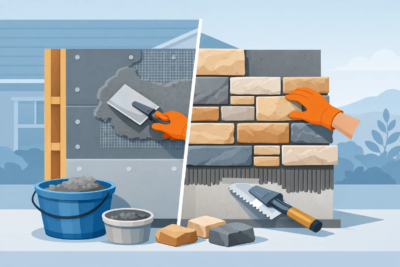
The backing system also deserves close attention. In many applications, manufactured stone veneer is installed over masonry, concrete, or a carefully prepared wall system with weather-resistive barriers, lath, scratch coat, mortar, and properly detailed flashing. When heat is involved, installers need to use materials and methods approved for that particular assembly. A shortcut hidden behind beautiful stone can compromise both performance and safety.
Interior Fireplaces Versus Exterior Chimneys
Interior fireplace projects usually demand the closest review because heat is concentrated around the opening and because mantels, trim, framing, and furnishings may be nearby. If you are remodeling an existing fireplace, determine whether it is masonry, a factory-built unit, a gas insert, or an electric unit before choosing the veneer profile. Each has different constraints.
With a traditional masonry fireplace, stone veneer may be installed on an appropriate masonry surround after proper surface preparation. The firebox itself remains a separate, high-heat area. If the fireplace is damaged, poorly vented, or has failing masonry, those conditions should be addressed before a cosmetic upgrade begins.
Exterior chimney veneer is more often governed by weather management, structural condition, and the chimney’s existing construction. Cracks, loose brick, missing flashing, or water intrusion should not be covered over. Stone veneer is a finish, not a repair for an unstable chimney. Once the chimney is sound and properly prepared, veneer can create a substantial upgrade in curb appeal.
Outdoor fireplaces and fire pits require the same discipline. Virginia freeze-thaw cycles, rain, and heat all place stress on exterior materials. Proper drainage, flashing, mortar selection, caps, and a suitable foundation are part of a lasting installation. A handsome stone face cannot compensate for water getting behind the wall or heat reaching an unapproved component.
Why Product Selection Still Matters
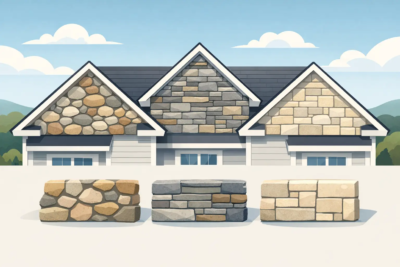
Not every stone profile creates the same visual result, even when the fire-safety requirements are identical. A tightly stacked profile can give a contemporary fireplace wall a clean, tailored look. Larger field stone often feels at home on a rustic chimney or covered porch. Cut stone can bring a more formal, architectural finish to an entry fireplace or a prominent exterior elevation.
Color matters as well. A fireplace often becomes the visual center of a room, while a chimney may be visible from the street. Choosing a veneer that works with the roof, siding, brick, trim, and landscape gives the project a deliberate appearance rather than making it feel added on later. Coordinated caps, keystones, and address details can carry that same material language across the property.
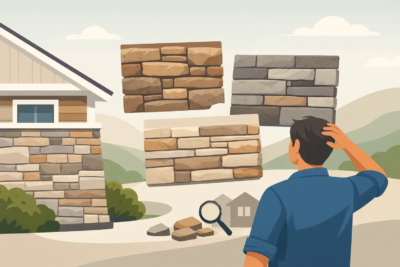
This is where samples and project planning are valuable. Look at the stone in the actual light of the room or exterior, and consider the scale of the wall. A small fireplace can be overwhelmed by oversized stone, while a tall two-story chimney may need a profile with enough visual weight to hold its own.
Questions to Settle Before Installation
Before ordering stone for a fireplace, chimney, or outdoor fire feature, confirm the appliance type and obtain its installation requirements. Determine where noncombustible materials are required, where clearances apply, and whether the existing wall or chimney needs repair. If the project is permitted in your locality, follow the applicable building and fire requirements and involve qualified professionals as needed.
It also helps to decide early whether the stone will stop at the mantel, continue to the ceiling, wrap adjacent walls, or connect visually to exterior stonework. These choices affect material quantities, transitions, trim details, and the final proportions of the space. Planning them upfront prevents a beautiful veneer installation from ending with awkward edges or mismatched finishes.
For homeowners considering a fireplace update or chimney remodel, the goal is not simply to cover a wall. It is to create a feature that looks right for the home, performs for years, and respects the safety requirements of the fire source behind it.
A well-chosen stone veneer can turn a plain chimney or fireplace into one of the most memorable parts of a home. Give the heat-producing components the technical attention they deserve, then let the stone provide the lasting craftsmanship and character everyone will see.