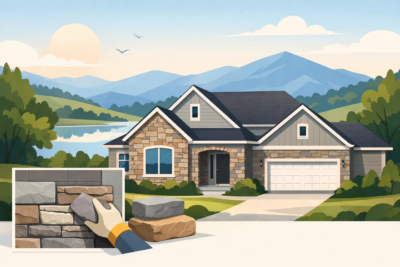

A small stone sample can make a big promise. It can show the warm gray that caught your eye, the texture you want around a fireplace, or the rustic character you picture on a new front façade. But a sample is only one piece of the decision. This guide to veneer stone samples helps Shenandoah Valley homeowners, builders, and remodelers look beyond a single piece and choose a finished stone design that belongs on the home.
Manufactured veneer stone gives you room to shape the character of a project, whether you are updating a chimney in Harrisonburg, finishing a foundation near Staunton, or adding an accent wall to a home in Rockingham County. The best selection comes from seeing how color, profile, grout, scale, and surrounding materials work together.
What Veneer Stone Samples Can Tell You
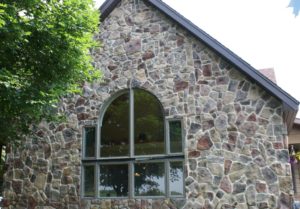
A quality sample lets you feel the surface texture, study the edges, and see the range of color within a stone profile. A ledge stone sample may reveal long, horizontal pieces with a more linear appearance. Field stone may show a fuller mix of shapes and a weathered, natural pattern. Cut stone offers cleaner geometry, while stack stone creates a tighter, more contemporary texture.
Samples are especially useful for comparing undertones. What reads as gray from a distance may include taupe, charcoal, brown, cream, or even subtle rust tones up close. Those underlying colors often determine whether the stone looks at home beside your siding, brick, roofing, trim, and landscape.
They also help you compare physical depth. Veneer stone has dimension, and that dimension affects shadow lines across a wall. A profile with pronounced relief can bring strong visual interest to a broad exterior elevation. A flatter, more even profile may be the better choice for a smaller interior accent where you want texture without a heavy look.
Still, a sample cannot show everything. It cannot fully recreate a 20-foot chimney, the rhythm of joints across a porch wall, or the way afternoon light moves across a façade. Treat it as a starting point for a larger design decision, not as the entire design.
How to Review Veneer Stone Samples at Home
Bring samples outside before making a final choice. Indoor lighting can mute warm tones or make cool grays look bluer than they will on the exterior. Set each sample against the wall, siding, or brick where the stone will be installed. View it in morning light, midafternoon sun, shade, and near dusk.
For interior projects, place samples near the actual flooring, cabinetry, mantel, and paint colors. A fireplace surround may look excellent beside a swatch of wall paint but feel too busy once it meets a richly grained wood floor. The goal is not for every material to match. The goal is for them to feel intentional together.
Look from several distances. Up close, you are evaluating texture and detail. From the curb or across a room, you are evaluating overall color mass and pattern. A stone with high contrast can be striking at arm’s length but may read as visually busy over a large wall. Conversely, a quieter blend can look understated in a sample and refined when spread across a full façade.
If possible, photograph the samples in place. Photos provide a useful comparison when you have been looking at several profiles, and they make it easier to discuss the project with a spouse, builder, mason, or designer. Keep in mind that phone cameras can shift color, so use the photo as a reference rather than the final authority.
Compare More Than the Main Color
Homeowners often begin with a simple request: gray stone, brown stone, or something neutral. That is a sensible starting point, but the better question is what the stone needs to support.
A home with warm beige siding and bronze windows may benefit from a blend that carries cream, soft brown, and charcoal notes. A black roof and white trim can support a stronger gray profile, especially on a modern farmhouse or clean-lined new build. Brick homes require more restraint. Stone should either relate to the brick’s undertones or create a deliberate contrast, rather than landing somewhere in between.
Pay attention to the mortar or grout color as well. It is not a background detail. A lighter joint can make individual stones more defined, while a darker joint can create a deeper, more unified appearance. The right choice depends on the profile, installation style, and the amount of stone being used.
Match the Profile to the Application
The same veneer stone sample can feel entirely different depending on where it is installed. Scale matters as much as color.
For a full front façade, a mix of medium and larger pieces can give the home a grounded, substantial presence. Field stone and cut stone profiles often work well where the goal is traditional character and a broad natural pattern. On a tall chimney, vertical proportion matters too. A profile with enough visual weight prevents the chimney from looking like a disconnected feature rising above the roofline.
For a foundation skirt, porch columns, or entry wall, choose a profile that supports the architecture without competing with it. A long ledge stone can emphasize the horizontal lines of a ranch home or low porch. Stack stone can give columns, outdoor kitchens, and contemporary fireplace surrounds a crisp, tailored look.
Smaller areas allow more freedom, but they also make every detail visible. On an interior wall or fireplace, consider how the stone will meet a mantel, drywall return, hearth, or adjacent built-ins. Finishing pieces can make these transitions look planned rather than patched together.
Do Not Forget Corners and Finishing Details
Flat samples show the face of the stone, but corners reveal how the installation will wrap around columns, returns, and outside edges. Ask to see how the chosen profile handles corners, particularly if your project includes a chimney, entry pier, or prominent porch column.
Coordinated details deserve attention early. A wall cap, pier cap, keystone, or house number can tie separate features together and give the project a complete architectural finish. For example, the stone around an entry may look even more purposeful when the columns, capstones, and address marker share a compatible color and texture.
These details should not be afterthoughts. They affect measurements, installation planning, and the final budget. Choosing them alongside the field stone helps prevent a nearly finished project from feeling incomplete.
Understand Variation Before You Order
Manufactured veneer stone is designed with color variation, texture, and individual character. That variation is part of what keeps a wall from looking flat or repetitive. Your sample represents the profile and blend, but it will not contain every color or shape that appears across the completed order.
This is why viewing multiple sample pieces, larger display panels, and installed projects is useful. You want to understand the full range, including the lightest and darkest tones in the blend. If you only love one piece in the sample box, the profile may not be the right fit. If you like the overall family of colors and the general texture, you are making the decision from a stronger place.
Installation also shapes variation. A skilled mason distributes colors, sizes, and shapes across the wall rather than allowing similar pieces to collect in one spot. Discuss the intended installation pattern before work begins, especially if you prefer a more random fieldstone look or a more consistent horizontal ledge appearance.
Use Samples to Make a Clear Project Plan
Before requesting an estimate, decide where stone will begin and end. A front elevation can look balanced with stone carried from grade to a natural architectural break, such as a porch roof, belt line, or change in siding. Stopping at an arbitrary height can make the upgrade look unfinished.
Bring your samples into that conversation along with photos of the house and approximate dimensions. Builders and homeowners should also identify nearby materials that need to coordinate: siding color, roofing, shutters, exterior lighting, front door stain, concrete, and landscaping. The earlier those relationships are considered, the fewer costly changes arise later.
At Grizzly Stone, sample selection is part of turning a material choice into a finished home feature. The right stone profile can give a dated chimney more presence, make an entry feel more welcoming, or help a new build look established from the day it is completed.
A sample is worth living with for a few days. Set it by the front door, hold it beside the siding, and look at it when you pull into the driveway. The profile that continues to feel right in the real setting of your home is often the one that will make the finished project feel like it was always meant to be there.