
A brick veneer addition can give a house weight and permanence, but it is not the only way to create a finished exterior. The best alternatives to brick veneer can add more texture, better suit a home’s architecture, or bring a dated chimney, foundation, entry, or façade into better balance with the rest of the property.
For homeowners across the Shenandoah Valley, the right choice often comes down to more than initial cost. Consider the existing siding or masonry, the scale of the wall, the amount of maintenance you are willing to take on, and whether you want a subtle improvement or a complete architectural transformation. A material that looks right on a front entry may feel too busy across an entire elevation.
Why homeowners look beyond brick veneer
Brick has a familiar, dependable appearance, and it remains a strong choice for many homes. Yet its regular pattern and limited color variation are not the right fit for every project. A homeowner may want a more natural profile around a chimney, a lighter finish for a contemporary renovation, or an accent material that connects a new addition to an older section of the house.
Installation conditions matter, too. Full-depth brick veneer requires structural support and adds considerable weight. Thin brick is lighter, but it still delivers the uniform, linear look of brick. When a project calls for varied depth, rugged texture, or a stronger focal point, another veneer material may create a more convincing result.
1. Manufactured stone veneer
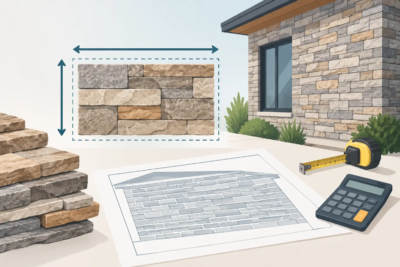
Manufactured stone veneer is one of the most versatile alternatives to brick veneer because it offers the character of natural stone without the weight and wall depth of full-bed masonry. It can be used on exterior façades, foundations, chimneys, columns, entry walls, outdoor living areas, and interior fireplaces or accent walls.
The design range is a major advantage. Field stone creates a weathered, gathered-stone appearance. Ledge stone brings horizontal movement and works well on contemporary and mountain-influenced homes. Stack stone provides a clean, layered texture for feature walls and columns. Cut stone gives a more tailored, architectural finish that can complement traditional homes, new construction, and formal entries.
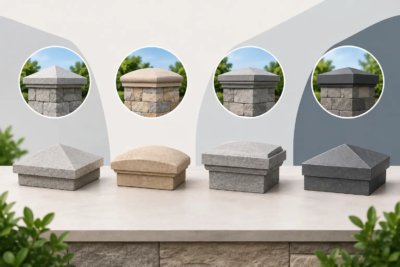
This option is especially effective when the goal is to make separate parts of a home feel intentionally connected. A stone foundation skirt can relate to a stone chimney. Matching pier caps, wall caps, keystones, or address numbers can carry the same material story from the driveway to the front door.
Quality and installation are essential. A veneer should have natural-looking variation in color, shape, and texture, while the installer must prepare the wall correctly and manage flashing, drainage, and mortar details. Properly selected and installed, manufactured stone can turn an ordinary elevation into a lasting architectural feature.
2. Natural thin stone veneer
Natural thin stone veneer uses real stone cut to a thinner profile for wall applications. It has genuine mineral variation, split faces, and a sense of permanence that is hard to duplicate exactly. For homeowners who want authentic stone in a renovation or custom build, it can be an excellent choice.
Its trade-off is predictability. Natural stone varies from piece to piece and from shipment to shipment, which is part of its appeal but can make precise color matching more difficult. It may also involve a higher material and installation cost than manufactured stone. For a broad façade, that investment can be substantial.
Natural thin stone works beautifully where the house and setting call for it: a substantial chimney, a grand entry, a garden wall, or a home with a strong historic or mountain character. It is less necessary when the project needs consistent color control, a specific stone profile, or a coordinated group of finished details.
3. Fiber cement siding and panels
Fiber cement is a practical alternative for homeowners who want a crisp, durable exterior with less visual weight than masonry. It is available in lap siding, shakes, vertical panels, and board-and-batten styles. That range makes it useful for farmhouses, Craftsman-inspired homes, transitional renovations, and clean-lined new builds.
Unlike brick or stone, fiber cement does not create deep texture. Its strength is order and proportion. A board-and-batten gable over horizontal lap siding can give a home more dimension, while a darker panel section can define an entry or bump-out without overwhelming the exterior.
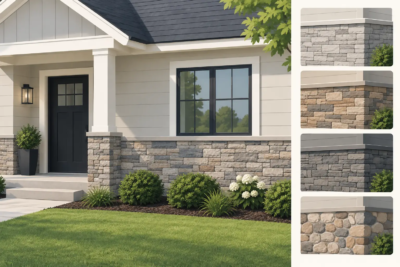
Fiber cement is often best paired with a masonry accent rather than treated as a direct substitute everywhere. For example, siding may cover the main walls while stone grounds the foundation, wraps the front porch columns, or gives the chimney a stronger presence. That combination prevents a large wall from becoming too heavy while still delivering the curb appeal homeowners want.
4. Stucco and acrylic finishes
Stucco offers a continuous surface rather than the individual-unit pattern of brick or stone. It can feel refined and quiet, especially on homes with simple massing, arched openings, Mediterranean influence, or contemporary lines. Color is integrated across the wall, and the finish can be smooth, sand-textured, or more heavily textured depending on the desired look.
In Virginia’s changing weather, details behind the finish deserve close attention. Moisture management, flashing, expansion joints, and the condition of the wall assembly all influence long-term performance. Stucco can also show cracking if the structure moves or if installation is rushed.
Design-wise, stucco benefits from contrast. Stone at the base of the house, around an entry, or at a fireplace can keep a broad stucco elevation from feeling flat. A carefully chosen cap or keystone can add a finished architectural touch without making the design overly ornate.
5. Engineered wood siding
Engineered wood siding gives homeowners the warmth of a painted wood exterior with more consistency than traditional wood boards. It is commonly used in lap profiles, panels, shakes, and vertical board-and-batten treatments. The look suits rural properties, updated colonials, cottages, and homes that need to feel welcoming rather than formal.
This material can be a smart choice when the home already has wood-inspired details such as a covered porch, exposed beams, or timber brackets. It is usually painted, so color selection becomes a major part of the project. A deep blue-gray, warm white, or muted green can change the entire character of a façade.
Engineered wood requires attention to proper installation and paint maintenance, particularly at cut edges, joints, and areas exposed to repeated moisture. It is not the same as a masonry material, but it can work exceptionally well beside stone. A stone wainscot or column base gives the composition a durable visual foundation, while siding keeps the upper walls lighter.
6. Vinyl siding
Vinyl siding remains a common choice for budget-conscious exterior updates. It is low-maintenance, readily available, and offered in many colors and profiles. For a full-house refresh, it can make sense when the priority is replacing worn siding and improving the home’s overall appearance without committing to a masonry-heavy design.
The limitation is visual depth. Even higher-quality vinyl does not have the texture or shadow lines of stone, brick, or wood. On a highly visible front elevation, it may benefit from a more substantial focal element. Stone around the entry, on porch columns, or along the lower portion of the façade can give vinyl-sided homes a stronger, more custom appearance.
7. Metal panels and architectural cladding
Metal siding and panels have moved beyond agricultural buildings. Standing-seam-style vertical panels, corrugated accents, and flat architectural cladding can give a home a modern, barn-inspired, or industrial edge. They are particularly effective on gables, additions, detached garages, and contemporary homes with simple forms.
Metal is not a universal fit. On a traditional brick colonial or a heavily detailed historic-style home, it can look disconnected unless used in small, intentional areas. Color, sheen, and placement matter. A matte dark metal roof or accent panel can look sharp beside gray or charcoal stone, while bright finishes may feel out of place in a wooded Shenandoah Valley setting.
Choosing the right material for the right surface
The best exterior projects do not force one material across every wall. They use contrast with purpose. Stone may carry the visual weight at ground level, on a chimney, or around the entrance. Siding, stucco, or panels can handle larger expanses. The result is a home that feels composed rather than covered.
Before choosing, stand across the street and look at the home’s strongest visual lines: the roof pitch, front entry, garage, chimney, and foundation. Then decide what deserves emphasis. A low foundation may need grounding. A plain entry may need definition. A tall chimney may need a material with more texture and scale.
At Grizzly Stone, the goal is not simply to add material to a wall. It is to help homeowners select stone profiles and finishing details that belong together, so the completed project looks like it was always part of the home.
The right alternative to brick veneer should do more than replace a surface. It should give your home a stronger sense of place, from the first view at the curb to the details visitors notice at the front door.