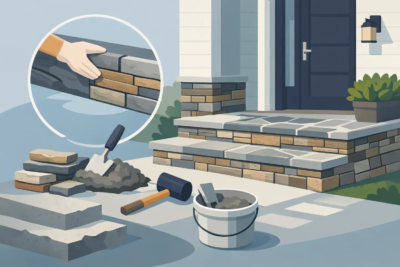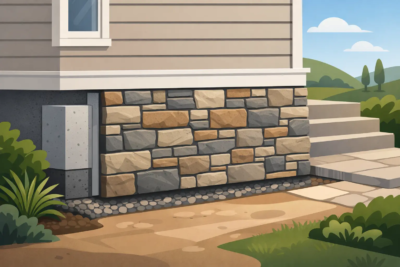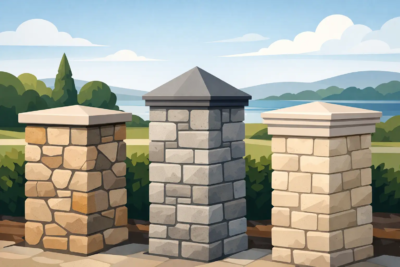

The front door may be where guests enter, but the entryway begins much earlier. It starts at the drive, the sidewalk, and the first view of your home from the street. A well-planned stone veneer entryway makeover gives that first impression more weight, texture, and permanence without requiring a full exterior renovation.
For many Shenandoah Valley homes, the most successful projects do not cover every available surface with stone. They use veneer where it has architectural purpose: around a recessed front door, on porch columns, across a foundation wall, or as a defined entry surround. The result feels considered rather than added on.
Start With the Entryway’s Architecture
Before choosing a stone color or profile, look at what the entryway already has to work with. A one-story ranch, a traditional Colonial, a farmhouse-inspired new build, and a craftsman-style home each call for a different approach. Stone should strengthen the home’s character, not compete with it.
A deep front porch can carry a larger stone presence, such as wrapped columns and a low porch wall. A smaller stoop may need a more focused treatment: stone on the foundation beneath the porch, a pair of column bases, or a clean surround at the door. On a tall facade, stone can help visually anchor the entry, but it should not rise so high that it makes the doorway look narrow or crowded.
Scale is often the difference between an entryway that feels substantial and one that feels unfinished. If the porch has broad posts, slim stone bases can look undersized. If the door is tucked beneath a low roofline, a heavy stacked-stone surround may overwhelm it. Measure the visible areas and consider the entry as a complete composition, including the door, trim, lighting, steps, railings, and landscaping.
Choose the Right Area to Veneer
An entryway makeover can be modest or more comprehensive. The right scope depends on the condition of the home, the budget, and how much existing exterior material needs to remain visible.
Stone-clad columns are a strong option when the porch already has structural posts that need more presence. They create a clear transition from the walkway to the front door and can be finished with coordinated pier caps for a polished top edge. Veneering the lower portion of the facade or foundation is another practical choice, especially when plain siding, aging brick, or exposed concrete makes the front elevation feel flat.
For a home with a covered entry but no porch columns, a stone wainscot beneath the windows can tie the door area to the rest of the facade. On larger homes, extending the same stone to a chimney or a nearby garage accent can create visual continuity. That does not mean every accent must match exactly. It means the materials should look like they belong to the same home.
Select a Stone Profile That Fits the Home
Manufactured stone veneer offers a wide range of appearances, from formal cut stone to irregular field stone, horizontal ledge stone, and contemporary stack stone. Each profile affects the mood of the entryway.
Cut stone brings order and tailored character. Its defined edges work especially well on traditional homes, brick-and-stone exteriors, and entries with symmetrical windows or formal trim. Field stone has a more natural, varied appearance that suits rural properties, cottages, and homes set against wooded or mountain views. It can feel relaxed and established, particularly when paired with warm siding colors and substantial timber details.
Ledge stone emphasizes horizontal lines. It is a natural fit for porch bases, low walls, and wide facades where the home benefits from a grounded look. Stack stone offers a cleaner, more linear texture and can work beautifully on newer construction or a simplified entry design. Its crisp pattern pairs well with dark doors, black lighting, and uncluttered trim.
Color deserves the same level of attention as profile. Look beyond the stone sample itself and compare it with the roof, siding, brick, shutter color, and hardscape. A stone blend with soft grays may bring balance to a home with a dark roof, while warm buff, brown, and tan tones can connect naturally to brick, wood, and the colors often found in Valley landscapes.
It depends on the goal. If you want the entry to stand out, select a profile or blend that offers controlled contrast against the siding. If the objective is a quieter, more timeless improvement, choose tones already present in the roof or masonry and let texture do the work.
Make the Stone Work With the Details
Stone alone does not complete an entrance. The details around it determine whether the project feels finished.
A front door is usually the strongest color element in the entry. Deep blue, black, stained wood, and muted green doors all work with stone, but the trim color should provide enough separation for the doorway to remain clear. Lighting should be scaled to the stone surface and installed where it can highlight texture without casting harsh shadows. On a substantial stone column, a fixture that is too small can disappear. On a narrow door surround, an oversized lantern can take over the wall.
Street numbers are another opportunity to make the design intentional. Numbers mounted on stone should be easy to read from the road and selected in a finish that relates to the lighting, door hardware, or railing. Coordinated architectural keystones can add a focal point above a doorway or opening when the home’s style supports it. Wall caps and pier caps provide a clean transition on low walls and columns, protecting the installation while giving it a deliberate final edge.
Do not overlook the walkway and steps. A beautiful stone entry can lose impact if visitors approach it on cracked concrete, mismatched pavers, or a path that is too narrow. A full hardscape replacement is not always necessary, but the approach should look maintained and visually connected to the new veneer.
Plan for a Finish That Holds Up
Manufactured stone veneer is designed to deliver the appearance of natural stone in applications where weight, installation needs, and budget make full-bed stone less practical. Still, the best-looking project depends on proper preparation and skilled installation.
The wall assembly needs the correct moisture-management details, substrate preparation, flashing, and attachment methods for the application. Entry areas are exposed to rain, freeze-thaw cycles, foot traffic, and the occasional bump from planters or furniture. Corners, transitions, caps, and areas around doors require particular care because they are where poor planning becomes visible first.
This is also why the lowest price is not always the best value. A veneer project may look comparable on the first day, but inconsistent joints, weak corner work, poor layout, and missing finishing pieces can make an entry feel less convincing over time. Ask how the stone profile will transition into siding, brick, trim, or porch decking. Ask where cuts will fall and how the installer plans to finish exposed edges.
For homeowners planning a larger renovation, it can be wise to think ahead. Even if the first phase is only the entryway, choosing a stone that can later be used on a chimney, retaining wall, foundation, or outdoor living feature keeps future improvements open. Grizzly Stone helps homeowners and building professionals select veneer profiles and coordinated components that support that kind of long-term design thinking.
Bring the Entryway to Life With Restraint
Once the stone work is complete, let it remain the durable backdrop of the entry. A seasonal planter, healthy foundation plantings, a quality doormat, and well-chosen lighting are usually enough. Too many small decorative items can distract from the texture and craftsmanship that made the renovation worthwhile.
A stone veneer entryway makeover should make your home feel more like itself: more grounded, more welcoming, and more complete from the first step toward the door. Choose the stone with the whole facade in mind, finish the edges with care, and give the entry the presence it deserves.