
A plain stucco front can make a home feel finished, but it rarely gives an entry, chimney, or foundation the same sense of permanence as stone. When homeowners weigh stucco versus stone siding, they are usually deciding more than color or texture. They are deciding how their home will handle Virginia weather, how much maintenance they want to take on, and what kind of first impression they want the property to make.
For homes across the Shenandoah Valley, the best choice depends on the architecture, the condition of the existing exterior, and where the material will be used. Stucco and stone veneer can both be attractive, durable exterior finishes. They simply perform differently and create very different design opportunities.
Stucco Versus Stone Siding at a Glance
Stucco is a cement-based exterior finish applied in layers over a prepared wall system. It can be smooth, lightly textured, or heavily textured, and it is commonly associated with Mediterranean, Southwestern, and certain contemporary home styles. Modern synthetic stucco systems can also provide a broad color range and a more uniform appearance.
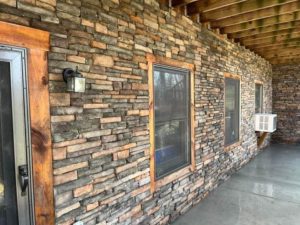
Stone siding is often used as a general term, but it is worth separating full-bed natural stone from manufactured veneer stone. Full-bed stone is thick, heavy, and requires substantial structural support. Manufactured stone veneer is a lighter, carefully molded product designed to capture the shape, color variation, and character of natural stone while working well on a broader range of residential projects.
That distinction matters for a renovation. Veneer stone can transform a chimney, foundation, front elevation, porch column, or interior wall without requiring the structural changes associated with full-depth stone. It gives homeowners a practical path to a more substantial architectural finish.
The Visual Difference Is More Than Texture
Stucco creates a continuous surface. That clean, monolithic look can be an advantage on a home with simple lines, broad wall planes, and minimal trim. A warm neutral stucco may pair well with dark roofing, wood doors, or black window accents. But because the surface is so uninterrupted, staining, cracks, and repairs can be noticeable.
Stone introduces scale, shadow, and natural-looking variation. A field stone profile can bring a relaxed, established feel to a farmhouse or mountain-inspired home. Ledge stone can create a more linear, tailored appearance. Stack stone often suits contemporary entries, fireplaces, and accent walls, while cut stone offers a more formal, architectural character.
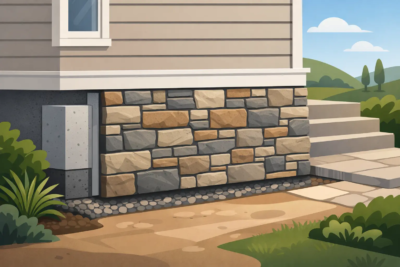
For many Valley homes, stone works especially well when it is placed with purpose rather than applied everywhere. A stone base can anchor a tall front elevation. A chimney faced in stone can turn an ordinary roofline into a focal point. Matching columns, wall caps, keystones, or address numbers help carry the design from the house to the driveway and landscape.
When a Full Stone Facade Makes Sense
A full stone veneer facade can be the right choice for homes with a lodge, traditional estate, rustic, or heavily detailed architectural style. It creates a strong visual statement and can make a new build feel more settled into its site.
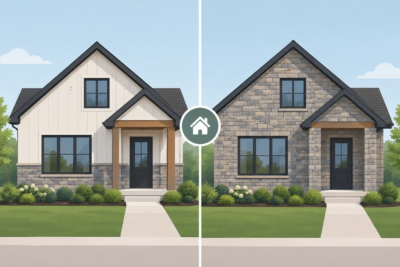
Still, restraint often produces the better result. If the home has limited facade depth, a full stone application can feel visually heavy. In those cases, a balanced combination of siding, stucco, or painted masonry with stone at the entry, foundation, chimney, or garage can give the home character without competing with its proportions.
Weather and Moisture Matter in Virginia
The Shenandoah Valley sees humid summers, cold winters, driving rain, and freeze-thaw cycles. Any exterior finish needs proper installation details to manage water. This is not an area where material selection should be separated from workmanship.
Stucco can perform well when installed over a correctly prepared drainage plane with proper flashing, weep screeds, and expansion joints. Problems arise when water gets behind the finish and cannot drain or dry. Cracking may be cosmetic, but it can also create a route for moisture intrusion. Around windows, doors, roof intersections, and wall penetrations, correct detailing is essential.
Stone veneer also requires a properly prepared wall assembly, including moisture management and appropriate flashing. The stone itself is durable, but the installation behind it determines long-term performance. A quality veneer system should be installed with attention to drainage, mortar application, transitions, and termination points.
Neither option is maintenance-free simply because it is masonry-based. The better question is whether the wall is designed and built to shed water reliably. A skilled installer and the right materials make a meaningful difference for both finishes.
Maintenance: What Homeowners Should Expect
Stucco maintenance generally centers on inspection and repair. Hairline cracks should be monitored and sealed when needed, particularly before winter weather. Larger cracks, loose sections, staining, or soft areas deserve a closer look because they may point to water getting behind the surface. Depending on the finish and exposure, stucco may also need periodic cleaning and repainting.
Stone veneer typically asks for less cosmetic upkeep. Occasional washing can remove dirt, pollen, and spider webs. Homeowners should inspect mortar joints and transitions around the stone, especially on chimneys, retaining walls, and areas exposed to splashback. If a stone or joint is damaged, a qualified mason can often make a targeted repair without refinishing an entire wall.
The maintenance advantage of stone is not that it can be ignored. It is that its inherent variation tends to hide the minor wear that stands out on a large, uniform stucco surface.
Cost Depends on Scope, Not Just Material
A straightforward stucco application may have a lower initial cost than a broad stone veneer installation, especially on a large, simple wall. However, comparing only the square-foot price can lead to the wrong decision. Wall preparation, demolition, trim changes, flashing work, access, architectural details, and labor all affect the total project cost.
Stone veneer is often a stronger investment where a targeted upgrade delivers a major visual return. Covering an aging foundation, rebuilding a dated chimney surround, adding an entry feature, or facing porch columns can dramatically improve curb appeal without renovating every exterior wall.
For a new home, stone can also reduce the need for decorative extras that do not carry the same weight. One well-designed stone facade element may do more for the home than multiple disconnected finishes. Coordinated caps, keystones, and finishing details help the work look intentional rather than added on later.
Choosing the Right Material for Your Home Style
Stucco may be the better fit when the home already has a clean, plaster-like exterior language, when a smooth contemporary look is the goal, or when the project requires a consistent finish over large wall areas. It can be particularly effective on designs with simple masses and carefully selected trim colors.
Stone veneer is often the better fit when the goal is warmth, depth, and a more architectural presence. It suits Colonial-inspired homes, farmhouses, craftsman designs, mountain homes, traditional new construction, and renovations that need a stronger focal point. It can also complement existing brick, fiber cement, vinyl siding, or stucco when the colors and proportions are planned together.
Before choosing a profile, look at the home from the street. Consider the roof color, window trim, driveway materials, landscaping, and the amount of stone already present on nearby structures. A stone color that looks appealing on a small sample may read differently across a large chimney or front facade. The profile size matters, too. Larger stones can overwhelm a compact entry, while a narrow stacked profile may disappear on a broad two-story elevation.
A Better Way to Plan a Stone Upgrade
Start with the part of the house that needs visual weight or practical improvement. It may be a blank gable, a patched foundation, a front door that lacks definition, or a chimney that looks disconnected from the rest of the exterior. From there, choose a stone profile that supports the architecture rather than following a passing trend.
Then plan the edges. This is where many projects either look complete or look unfinished. Clean transitions to siding or stucco, properly selected corners, coordinated caps, and thoughtful details around lighting and house numbers make the finished work feel built into the home. Grizzly Stone works with homeowners and building professionals to select veneer stone and finishing pieces that create that cohesive result.
A beautiful exterior does not have to begin with a whole-house renovation. The right stone placement can give your home the presence it has been missing, one well-crafted wall, chimney, entry, or column at a time.