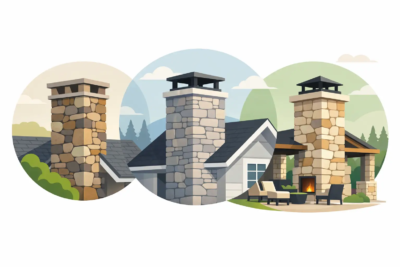

A chimney is one of the few exterior features that rises above the roofline and remains visible from nearly every approach to your home. When its finish feels dated, undersized, or disconnected from the rest of the façade, the whole house can lose presence. The best chimney surround materials do more than cover a masonry structure. They give it proportion, weather resistance, and a finish that makes the home feel intentionally designed.
For Shenandoah Valley homeowners, the right choice has to stand up to changing seasons while fitting the character of the property. A rustic farmhouse, a traditional brick colonial, and a clean-lined new build may all need a chimney surround, but they should not all receive the same treatment.
What a Chimney Surround Needs to Do
A chimney surround is exposed to more than ordinary wall surfaces. It handles wind, rain, freezing temperatures, summer heat, and the visual weight of being above the roofline. Material selection should start with performance, then move to color, shape, and texture.
A quality installation also depends on the wall assembly behind the finished surface. Flashing, drainage, attachment methods, mortar, and the condition of the existing chimney all matter. If a chimney has cracking masonry, water intrusion, or failing flashing, those conditions should be addressed before a new finish is installed. A beautiful veneer cannot correct a structural or moisture problem underneath it.
For wood-burning chimneys and fireplace surrounds, local building requirements and manufacturer specifications also govern clearances and the materials used near heat-producing components. A qualified mason, builder, or installer can confirm what is appropriate for your particular chimney.
Best Chimney Surround Materials for Lasting Appeal
Manufactured Stone Veneer
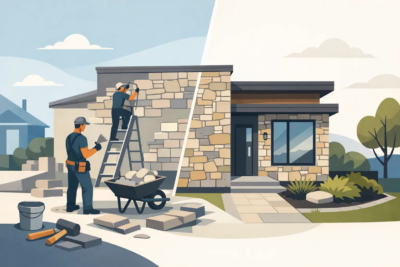
Manufactured stone veneer is often the strongest all-around option for homeowners who want the look of substantial stone without the weight and cost associated with full-bed natural stone. It is designed to be installed over properly prepared masonry or framed assemblies, allowing a tired brick chimney, block chase, or plain exterior chimney to take on a much more finished appearance.
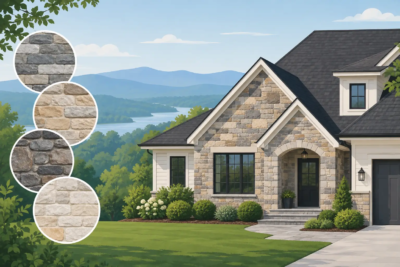
Its greatest advantage is range. A fieldstone profile can create a relaxed, established look for a country home. Ledgestone brings horizontal movement and a more tailored feel. Cut stone works especially well on traditional homes, where clean lines and a more formal pattern suit the architecture. Stack stone can give a contemporary home or outdoor living area a crisp, textured finish.
Manufactured veneer also makes it easier to coordinate the chimney with other parts of the property. The same stone profile can be repeated at the foundation, front entry, porch columns, retaining walls, or an interior fireplace wall. That repetition creates a home that feels composed rather than decorated one feature at a time.
The trade-off is that veneer requires careful installation. Proper flashing and water management are essential, particularly where the chimney meets the roof. Skilled workmanship makes the difference between a surround that looks integrated for years and one that develops preventable staining or moisture issues.
Natural Stone
Natural stone offers unmatched variation in color, texture, and geological character. It is an excellent fit for homes built around authentic regional materials, especially larger properties, historic-style renovations, and designs where the chimney is meant to be a major architectural focal point.
Because each piece is naturally formed, natural stone has a depth that cannot be repeated exactly. It can look especially at home in the Shenandoah Valley landscape, where stone foundations, fieldstone walls, and mountain-inspired architecture have long been part of the visual language.
However, natural stone is generally heavier, more labor-intensive, and more expensive to install. It may require additional structural consideration, depending on the application and stone thickness. For homeowners who love the appearance but want a more predictable budget and easier material handling, manufactured veneer can deliver a similar design direction with greater flexibility.
Brick
Brick remains a classic chimney material for good reason. It suits colonial, ranch, cape, and traditional Virginia home styles, and it can look appropriate whether the home is fifty years old or newly built. A full brick chimney can provide a timeless, solid appearance that feels permanent and familiar.
The challenge with brick is matching. If you are repairing or extending an existing brick chimney, finding a close match in color, size, and texture can be difficult. New brick next to older brick may look noticeably different, especially after years of weathering. Brick can also feel flat on a home that needs more texture or contrast.
For a brick house, a stone veneer surround can be a strong alternative when used selectively. A stone chimney can create a focal point without requiring every exterior surface to change, particularly when its colors are chosen to complement the existing brick rather than compete with it.
Stucco
Stucco creates a smooth, restrained chimney finish that fits Mediterranean, European-inspired, and some contemporary home designs. It can be painted or tinted to coordinate with siding, trim, and exterior accents. When the architecture calls for simplicity, stucco prevents the chimney from becoming visually busy.
Its weakness is maintenance sensitivity. Cracks, staining, and moisture concerns can become more visible over time, particularly in climates that experience freeze-thaw cycles. A properly detailed stucco system can perform well, but it demands attention to installation and repair. It is usually not the best option for a homeowner who wants pronounced texture and low-maintenance visual warmth.
Fiber Cement and Siding Materials
For chimney chases on newer homes, fiber cement panels or lap siding may appear to be the easiest way to match the rest of the exterior. This approach can be appropriate when the goal is for the chimney to recede into the overall design rather than stand out.
Still, a tall siding-clad chimney can sometimes look thin or temporary, especially on a home with a broad roofline or a substantial front elevation. Adding stone veneer to the lower portion or wrapping the entire chase in stone can give the home a stronger anchor. The best choice depends on whether the chimney should blend in or become a defining feature.
Match the Stone Profile to the Home
The material category is only the first decision. Profile, scale, and color determine whether the chimney feels right for the house.
A low, wide ranch home often benefits from horizontal ledgestone or stack stone that emphasizes its long lines. A two-story traditional home may need cut stone or a balanced fieldstone profile to give the chimney enough visual weight. On a cottage or cabin-inspired home, irregular fieldstone can add age and natural charm without looking overly formal.
Color should connect with permanent elements already in place. Look at the roof, brick, siding, shutters, and foundation. Cool gray stone can sharpen a home with charcoal roofing and white trim. Warm browns, buff tones, and muted rust colors may better suit tan siding, weathered roofing, or red brick. Avoid selecting stone from a small sample alone whenever possible. View larger panels in daylight, and consider how the color will read from the street.
The chimney cap and termination detail deserve attention as well. A properly proportioned cap can make the top of the chimney look complete, while a poorly sized or mismatched cap can interrupt an otherwise strong design. Coordinated architectural details, including caps and keystones where appropriate, help the surround feel like part of the original home.
Consider the Scope Before Choosing a Material
A full chimney wrap creates the greatest transformation, but it is not the only option. If the chimney rises through the center of a roof and is only visible from a distance, a simpler material may be practical. If it faces the street or frames an outdoor living area, investing in stone can make a far larger difference in curb appeal.
Budget should account for preparation and installation, not just the material itself. Access at roof height, scaffolding, chimney repairs, flashing work, and demolition of an existing finish can all affect the final project cost. A detailed estimate helps clarify which material and profile will achieve the desired result without surprises.
For homeowners planning several exterior improvements, it is often wise to select the chimney material first. Because the chimney is highly visible and vertically prominent, it can establish the color palette for entry columns, foundation accents, landscape walls, and other stone features. Grizzly Stone can help homeowners and trade professionals select a veneer profile that carries that visual direction across the property.
A well-chosen chimney surround should make the house look more settled in its setting, not merely more expensive. Choose the material that fits your architecture, respects the demands of the installation, and gives you a detail you will be glad to see every time you pull into the driveway.