
A home can have good siding, a new roof, and a well-kept lawn yet still feel unfinished from the street. Often, the missing ingredient is visual weight at the places your eye naturally lands: the entry, chimney, foundation, corners, and outdoor gathering spaces. The right masonry accent ideas add that weight with color, texture, and architectural character, turning a plain elevation into a home that feels intentionally designed.
For Shenandoah Valley homeowners, stone veneer offers an especially practical way to make that change. It brings the enduring appearance of natural stone to a remodel or new build without requiring every exterior surface to be masonry. The strongest projects do not apply stone everywhere. They use it where it can frame, ground, and elevate the architecture.
Masonry Accent Ideas That Create a Cohesive Exterior
1. Build a stronger front entry
The front entry is a natural place to invest because guests see it up close. Stone veneer around a covered porch, beneath a portico, or on the wall surrounding the front door creates a sense of permanence before anyone steps inside. Field stone can give a traditional Virginia home a relaxed, established look, while ledge stone or stack stone brings cleaner lines to a newer design.
Keep the scale of the entry in mind. A small stoop may only need stone on the lower portion of the wall or on two supporting piers. A larger porch can carry a fuller stone treatment, including column bases and a matching skirt wall. The goal is to make the entrance feel anchored, not crowded.
2. Give porch columns real presence
Plain wood-wrapped columns can make a porch feel temporary, especially on a broad front elevation. Adding stone to the lower third or half of a column creates a substantial base while preserving the lighter look of painted posts above. This combination works well on farmhouses, Craftsman-inspired homes, and many transitional designs common throughout the Valley.
For the cleanest result, repeat the same veneer profile used elsewhere on the home. Coordinate the columns with wall or pier caps so the transition from stone to post looks deliberate rather than like an add-on.
3. Turn a chimney into an architectural focal point
A chimney is one of the few tall vertical features on most homes. When it is finished in siding or a material that does not relate to the rest of the exterior, it can look disconnected. Stone veneer gives it a stronger visual role and can help balance a wide roofline or two-story façade.
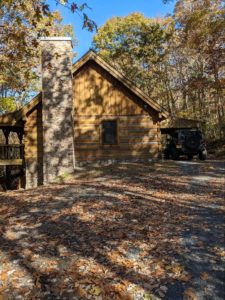
A full-height chimney is a classic choice, but partial stone can also work. Extending veneer from the base to just above the roofline is effective when the chimney is visible from the front or side yard. For a subtler update, consider stone at the exposed fireplace bump-out or lower chimney section. Color matters here: choose tones that relate to the roof, brick, trim, or surrounding landscape rather than trying to match them exactly.
4. Ground the foundation with a stone water table
A low band of veneer along the foundation, often called a water table or stone skirt, is one of the most useful exterior masonry accents. It visually grounds siding and helps a tall foundation look less exposed. This is particularly valuable on sloped lots, where one side of the home may show considerably more foundation wall than the other.
A foundation accent should follow the home’s existing lines. Stopping it at logical breaks, such as corners, porch returns, or transitions in siding, keeps it crisp. If the foundation is modest, a shorter stone band may be enough. If it is highly visible, extending the veneer higher can create a more balanced proportion.
5. Frame a garage without overdoing it
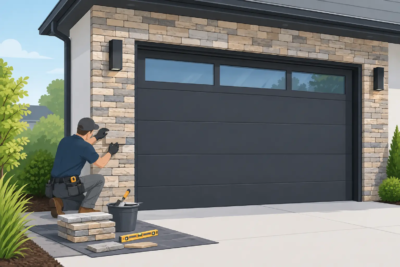
Garage doors take up a large amount of visual space, especially on front-facing garages. Stone around the lower walls, on side bump-outs, or around a recessed garage bay can reduce the blank, flat appearance without making the garage the star of the house.
Avoid wrapping every inch of the garage in stone unless the home’s architecture supports it. Usually, a connected stone base that carries from the front entry to the garage, or two balanced stone wings at either side, gives a more refined result. Matching the stone used on the entry helps the entire façade read as one design.
6. Add definition at corners and wall projections
Wall projections, bay windows, and outside corners are ideal locations for masonry because they already create shadow and dimension. Veneer on these areas can make a home look more solid and layered. Cut stone is often a natural fit for more formal homes, while irregular field stone can soften a traditional or rustic exterior.
This approach is most successful when the accents are repeated with purpose. One isolated stone corner may look accidental. Stone at the entry, a chimney, and a projecting wall can create a visual rhythm across the front elevation.
Interior Masonry Accents Worth Bringing Inside
7. Create a fireplace wall with depth
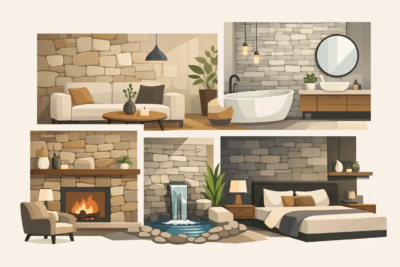
A fireplace is meant to be a focal point, and stone gives it the material presence to do that job. A full-height veneer wall can draw the eye upward in a room with vaulted ceilings. In a smaller room, stone from the hearth to the mantel or a carefully sized surround may feel more appropriate.
Profile selection shapes the mood. Ledge stone and stack stone offer a more linear, contemporary feel. Field stone tends to feel warmer and more relaxed. A cut stone fireplace can support a more tailored, traditional interior. Consider the room’s lighting as well. Deeply textured stone produces richer shadows, which can be beautiful but may feel visually busy in a compact space.
8. Define a basement bar or gathering area
Finished basements often need materials that separate the entertaining zone from the rest of the room. Stone on a bar front, a media wall, or a short divider wall can do that without relying on extra trim or paint colors. It also gives a lower-level space the same level of finish as the main floor.
Use restraint in rooms with limited natural light. One masonry feature is usually enough. Pairing a stone bar, fireplace wall, and multiple stone columns in the same basement can make the space feel heavy unless the room is large and well-lit.
9. Make a statement in a mudroom or entry hall
A narrow wall of veneer behind a bench, coat hooks, or console table gives an everyday drop zone a more finished character. This is a smaller project, but it can connect an interior renovation to exterior stone details. It works best when the rest of the room remains simple, with practical flooring and uncomplicated cabinetry.
Outdoor Masonry Accent Ideas for the Way You Live
10. Finish retaining walls and landscape borders
Retaining walls do demanding work on sloped Shenandoah Valley properties, but they do not have to look purely utilitarian. Veneer facing on a properly built wall can tie the landscape to the home’s façade. Stone caps provide a clean top edge and create an informal place to sit near a patio or fire feature.
Because retaining walls manage soil and water pressure, appearance cannot be the only consideration. Proper base preparation, drainage, and structural construction come first. Veneer is the finish that completes the visible face of a sound wall.
11. Upgrade a patio fireplace or outdoor kitchen
Outdoor living spaces deserve the same material coordination as the house. Stone veneer on a fireplace, kitchen island, pizza oven surround, or grill enclosure makes a patio feel connected to the home rather than placed beside it. A field stone fireplace can suit a wooded setting, while a crisp stack stone island may better complement a contemporary patio.
Use caps and hearth materials that handle the edges cleanly. These finishing pieces matter because outdoor structures are viewed from close range. A well-proportioned cap, hearth, or seat wall can make a simple feature look custom built.
12. Use matching details to finish the design
The difference between a house with stone and a house with a complete masonry design is often found in the details. Address numbers set into stone, architectural keystones, wall caps, pier caps, and coordinated mailbox or gate columns bring disparate elements together. They are especially effective when a homeowner is improving curb appeal in stages rather than undertaking a full renovation at once.
Grizzly Stone helps homeowners and building professionals choose veneer profiles and finishing components that work as a complete composition. A stone selection should look right not only in a sample board, but also beside the siding, roof, trim, hardscape, and natural setting of the property.
How to Choose the Right Stone Accent
Start by identifying the feature that most needs attention from the street or from the room where you spend the most time. For some homes, that is a dated foundation. For others, it is an undersized entry, a bare chimney, or an outdoor patio with no focal point. One well-designed improvement often creates more impact than several small, unrelated changes.
Then consider scale, style, and repetition. Larger, more textured profiles can hold their own on broad façades and tall chimneys. More linear profiles may suit clean contemporary architecture or smaller feature walls. Repeating the same stone in two or three connected locations creates cohesion, while using too many profiles can make a home feel pieced together.
The best masonry accents do more than decorate a wall. They give the home a stronger sense of place, create a finished transition between architectural elements, and make everyday views from the driveway, porch, or living room more satisfying. Choose the feature that will change how your home feels every time you arrive, then build the rest of the design around it.