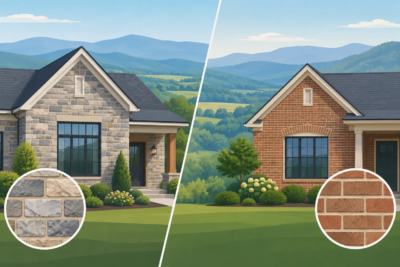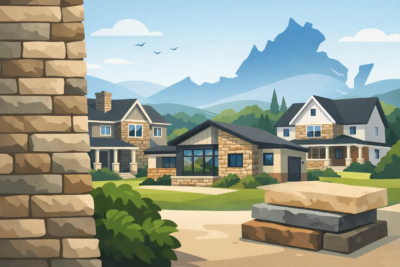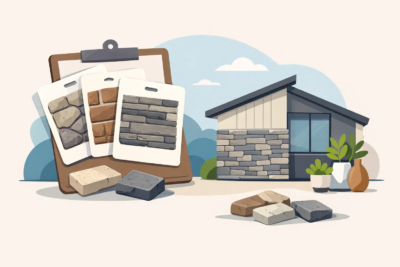

A front entry can be finished with plain siding and a standard concrete step, or it can be given a sense of permanence with stone, a substantial cap, and details that belong together. That is why the choice of cast stone versus veneer matters. Both can add architectural character to a Shenandoah Valley home, but they do different jobs, carry different visual weight, and belong in different parts of a project.
For a new build, a chimney remodel, or a curb-appeal update, the strongest result usually comes from understanding where each material performs best rather than treating them as interchangeable.
What Cast Stone Is Designed to Do
Cast stone is an architectural precast concrete product made to resemble natural cut stone. It is formed in molds, cured, and produced in repeatable shapes and sizes. Depending on the piece, it may have a smooth, honed appearance or a more textured finish. Its real strength is precision.
Homeowners often recognize cast stone in the details that frame and finish a home: window sills, coping, wall caps, pier caps, hearths, lintels, keystones, trim bands, address blocks, and entry features. These pieces create crisp edges and intentional transitions where a field of stone alone might look unfinished.
Because cast stone components are often thicker and more substantial than veneer, they can visually anchor a project. A pair of capped entry piers, for example, can make a driveway entrance feel complete. A properly proportioned cap can protect the top of a retaining wall while also giving it a tailored appearance. Cast stone is especially effective where a piece needs a defined profile, a consistent dimension, or a finished top surface that sheds water.
It is not automatically the right choice for covering an entire exterior wall. That use can be possible in certain designs, but it is usually more material- and labor-intensive than a veneer application. Cast stone shines when it is used as the architectural punctuation around a home.
What Stone Veneer Brings to a Project
Manufactured stone veneer is a non-load-bearing facing material. It is designed to be installed over a properly prepared wall system, creating the appearance of full-depth stone without requiring a full masonry wall. Profiles such as cut stone, field stone, ledge stone, and stack stone give homeowners considerable freedom to choose a look that suits the home.
Veneer is the material most people picture when they imagine transforming a broad section of siding, an aging brick chimney, a foundation, or an interior fireplace wall. It covers surface area efficiently and delivers texture, color variation, and shadow lines that make a house feel more grounded in its setting.
A field stone veneer can give a rural property a relaxed, time-worn character. Ledge stone creates longer horizontal movement that works well on contemporary ranch homes and low walls. Cut stone offers a more tailored look for columns, façades, and formal entries. Stack stone can make an interior accent wall or outdoor kitchen feel clean and current.
The term “veneer” can also describe thin natural stone, so it is worth being specific when comparing products. Manufactured veneer and natural thin veneer have different color variation, weight, cutting requirements, and price ranges. When homeowners ask about veneer for a project, the best starting point is the desired profile, wall area, and installation conditions.
Cast Stone Versus Veneer: The Key Differences
The clearest difference is function. Veneer covers a wall face. Cast stone finishes an edge, opening, top, or transition. A home can use one material successfully, but many of the most convincing projects use both.
Consider a stone-clad front elevation. Veneer may cover the lower façade and wrap the columns, establishing the main texture and color story. Cast stone can then cap the columns, define the stair landing, create a water-shedding sill below windows, or add a keystone over an arched opening. The materials do not compete when their roles are clear.
Weight and installation also differ. Veneer is generally lighter and made for wall cladding, which makes it a practical choice for large vertical areas. It still requires proper surface preparation, flashing, drainage details, mortar, and skilled installation. Stone failures are often installation failures, particularly where water is allowed behind the material.
Cast stone pieces can be heavier and may require more planning for support, handling, and placement. A substantial cap or lintel should never be treated like a decorative afterthought. The installer and project designer need to account for bearing, attachment, slope, joints, and water management from the beginning.
Appearance is another meaningful distinction. Veneer creates a varied, assembled stone surface with many individual units. Cast stone tends to create cleaner lines and more formal geometry. If your goal is a broad, natural-looking stone field, veneer is usually the better fit. If you want sharp trim, defined caps, or formal masonry details, cast stone may be the better answer.
Where Each Material Makes the Most Sense
For a chimney remodel, veneer is often the primary material because it can cover the chimney chase and bring a tall, blank surface into proportion with the rest of the house. A cast stone cap or termination detail may then provide the finished top edge, depending on the chimney design.
For entry columns, either option can work. Veneer-wrapped columns bring rich texture and make a porch feel more substantial. Cast stone caps add a finished crown and can tie the columns to steps, wall caps, or nearby landscape features. If a column base is being built from scratch, proportions matter as much as product selection. A narrow column with an oversized cap can look awkward, while a generous base with a carefully sized cap feels established.
For foundation accents and full façade updates, veneer is usually the practical choice. It can cover a limited portion of the front elevation to create visual balance without overwhelming the home. On a smaller house, a stone wainscot around the entry or garage may be enough. On a larger home with multiple gables, a stronger veneer presence can support the scale of the architecture.
For garden walls, mailbox surrounds, and landscape piers, the choice depends on construction and exposure. Veneer can create a beautiful face over a properly built structure. Cast stone wall and pier caps are often the natural finishing component because they protect the masonry below and give the work a deliberate endpoint.
Indoors, veneer is a popular choice for fireplace surrounds, feature walls, and bar fronts because it adds texture without consuming as much room as full-depth masonry. Cast stone is often reserved for a mantel, hearth, or surround detail where a cleaner architectural line is wanted.
Color, Scale, and Regional Character
In the Shenandoah Valley, stone selections often look best when they acknowledge the home’s setting rather than chasing a short-lived trend. Warm grays, earth tones, weathered browns, and balanced blends can complement wooded lots, open farmland, historic neighborhoods, and mountain views. The right profile can feel equally at home on a farmhouse renovation, a traditional two-story, or a newer craftsman-style build.
Scale deserves close attention. Small, busy stone units on a large façade can read as cluttered from the street. Oversized stone profiles on a modest ranch can feel out of proportion. Take cues from the roofline, window sizes, siding color, and setback from the road. A material sample is useful, but viewing a larger installed area is even better because color and texture change dramatically at distance.
Coordinated components make a difference here. A veneer color that looks right on a chimney can lose impact if the cap, address detail, and adjacent masonry feel unrelated. Grizzly Stone helps homeowners and construction professionals consider the main stone profile alongside finishing pieces so the project reads as one design rather than a collection of upgrades.
Budget and Long-Term Planning
There is no universal winner on cost. Veneer is often the more economical route for covering a large wall area, while cast stone can be a worthwhile investment for high-visibility details that would be difficult to recreate with standard masonry. The final price depends on the product profile, quantity, site access, wall preparation, custom shapes, and installer labor.
Instead of asking only which material costs less per square foot, consider what the finished area needs to accomplish. A front elevation may need veneer to add character across a broad surface. An entry wall may need a cast stone cap to look complete and to handle water properly. Spending on the right component in the right location usually produces a better result than stretching one material across every feature.
Maintenance is generally straightforward for both when materials are installed correctly. Periodic inspection is wise, especially around caps, flashing, joints, and areas exposed to repeated freeze-thaw cycles. Address cracks, loose mortar, or drainage concerns early. Keeping water out of the wall system is more valuable than any surface cleaning routine.
Start With the Feature You Want to Transform
The best material decision begins with a specific view of the finished home. Stand at the curb and identify the feature that feels unfinished: the bare foundation, the flat chimney, the entry columns, or the landscape wall with no defined top. Veneer may give that feature texture and presence. Cast stone may give it the structure and finishing detail it lacks.
When the profile, color, cap, and surrounding materials work together, stone does more than cover a surface. It gives your home the kind of lasting character that still feels right every time you pull into the driveway.