
A stone fireplace surround can make a room feel settled and substantial. A stone façade can give a new home the character it seemed to be missing. But the joint treatment changes the entire result. When comparing dry stack versus mortared stone, the question is not simply whether you prefer visible mortar. It is about choosing a stone profile and installation approach that fit your home’s architecture, the scale of the project, and the look you want to live with for years.
For homeowners across the Shenandoah Valley, both styles can create a beautiful finish. The right choice comes down to the character you want the stone to bring forward.
What Dry Stack Stone Looks Like
Dry stack stone is defined by tight, closely fitted pieces with little or no mortar visible on the finished face. The stone appears to rest directly against the pieces around it, creating clean horizontal lines, natural shadowing, and a more contemporary sense of precision.
The look is especially effective with ledge stone and stack stone profiles. Their longer, more linear shapes establish rhythm across a wall without drawing attention to the joints. On a home exterior, dry stack veneer can make an entry, foundation skirt, porch column, or full façade feel crisp and intentional. Indoors, it is a strong choice for fireplace surrounds, feature walls, and bar fronts where texture matters but a busy surface does not.
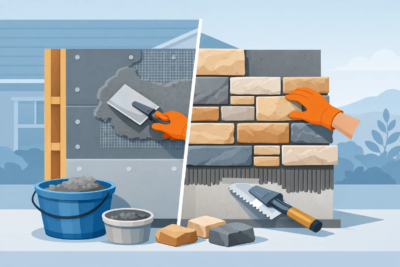
There is an important distinction worth making. A dry stack look in manufactured veneer stone is not the same as a freestanding wall built from loose stone without mortar. Veneer stone is installed over a properly prepared backing system using the installation materials and methods appropriate for the product and application. The finished joints are simply kept tight and recessed so they are not the visual focus.
That distinction matters because a beautiful dry stack finish still depends on careful surface preparation, proper flashing and water management on exterior work, and experienced installation.
When dry stack is a natural fit
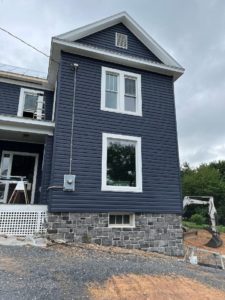
Dry stack works particularly well on homes with clean rooflines, simple trim packages, dark window frames, timber details, or modern farmhouse influences. It also complements mountain and rustic architecture when the selected stone has varied texture and earthy color movement.
Because the joint lines are so restrained, the profile itself becomes more noticeable. A highly textured fieldstone may feel more relaxed and organic, while a more linear stack stone can feel tailored and architectural. On a smaller feature, such as the base of a front porch, dry stack can deliver a dramatic upgrade without overwhelming the rest of the elevation.
What Mortared Stone Looks Like
Mortared stone uses visible joints between individual pieces. Those joints may be lightly raked back, flush with the stone face, or more pronounced depending on the desired finish. Mortar becomes part of the composition, adding contrast, depth, and a familiar sense of traditional masonry.
This style often suits colonial, farmhouse, craftsman, cottage, and classic Virginia homes. It can also be the better choice when a project needs a little more visual separation between stones. Field stone and irregular cut stone, for example, often benefit from visible mortar because it highlights their individual shapes rather than asking every piece to read as one continuous surface.
Mortar color matters as much as joint width. A gray or charcoal mortar can create a quieter, more grounded appearance. A warmer buff tone can soften the stone and feel at home beside brick, wood siding, or warm exterior paint colors. A contrasting joint can make the pattern more pronounced, while a complementary color allows the stone itself to remain the focal point.
Why joint style changes the scale of a wall
Visible mortar breaks a stone wall into individual elements. That can make a large chimney feel handcrafted and welcoming, or give a broad exterior wall more visual movement. Dry stack does the opposite. It tends to read as a continuous textured plane, which can make a smaller area appear cleaner and more expansive.
Neither approach is automatically better. A tall fireplace wall in an open great room may need the stronger pattern and tradition of mortared field stone. A narrow contemporary fireplace may look better with tightly stacked ledge stone that keeps the lines calm.
Dry Stack Versus Mortared Stone: Key Decisions
The most useful way to compare dry stack versus mortared stone is to consider the project as a whole rather than choosing from a small sample alone. Stone that looks perfect in a display panel may take on a different character across a two-story chimney or a long foundation wall.
Start with the home’s existing materials. Brick, siding color, roofing, shutters, window trim, and hardscape all affect the final decision. A dry stack profile can create a clean bridge between charcoal roofing and black-framed windows. Mortared field stone may better connect an older home with traditional brick, painted wood trim, and a covered front porch.
Next, consider the scale. Dry stack commonly shines on focused architectural features, including columns, entry walls, fireplace surrounds, and accent sections. It can absolutely cover a full home, but the profile and color blend should have enough variation to avoid looking repetitive over a large area. Mortared stone is often especially forgiving and visually rich on expansive façades, chimneys, and retaining-wall applications where the eye has room to appreciate individual stone shapes and joints.
Then think about the level of contrast you want. Dry stack generally offers a more uniform, low-joint appearance. Mortared stone can be subtle too, but it gives you another design lever in the mortar color and finish. If you want the masonry to feel more traditional and expressive, that flexibility can be valuable.
Installation and Long-Term Performance
For either finish, craftsmanship behind the visible stone is as important as the stone itself. Exterior veneer work must account for the wall system, drainage plane, flashing details, substrate condition, and local building requirements. In the Shenandoah Valley, where winter moisture and freeze-thaw cycles are part of the landscape, those details are not optional.
Dry stack installation requires especially thoughtful stone placement. Tight joints leave little room to disguise uneven spacing or abrupt changes in course height. The installer must balance the stone pattern, avoid obvious repetition, and maintain the intended horizontal flow. A well-executed dry stack wall looks effortless because the planning is not visible.
Mortared stone has its own demands. Joint consistency, mortar color, tooling, and cleanup all shape the finished appearance. Poorly handled mortar can smear the stone face or create an uneven pattern that distracts from the material. The best mortared work has a deliberate, natural rhythm rather than joints that look overfilled or mechanically uniform.
Maintenance needs are generally modest for quality manufactured stone veneer installed correctly. Routine inspection is wise, especially around exterior transitions, flashing, caps, and areas exposed to repeated water. Avoid harsh cleaning methods that can damage the stone finish or mortar. If staining or a repair issue arises, it is better to address the cause of moisture or movement rather than treating only the surface symptom.
Do Not Overlook Caps, Corners, and Finishing Details
A stone project feels complete when its edges and transitions are resolved with the same care as the field area. Corners need to look natural, especially with dry stack profiles where the coursing is prominent. Chimneys, columns, and low walls also benefit from appropriately scaled caps that shed water and provide a finished top line.
Architectural details can pull the entire elevation together. Matching wall caps, pier caps, keystones, and even stone-framed address numbers can connect an entry feature to a chimney or foundation accent. These are small decisions, but they keep a project from looking like stone was added as an afterthought.
Choosing the Right Stone for Your Project
If your goal is clean lines, a close-fitted texture, and a more current architectural feel, dry stack stone is likely the stronger direction. If you want traditional masonry character, visible craftsmanship, and flexibility through mortar color and joint treatment, mortared stone may better serve the home.
Bring photos of your exterior, material samples, and a sense of the spaces you want to improve. Seeing the stone profile beside your siding, roofing, paint colors, or cabinetry is far more useful than choosing by name alone. A carefully selected veneer can turn a dated chimney, plain entry, or ordinary foundation into the detail that makes the whole home feel finished.