
A stone veneer profile does more than add texture to a wall. It sets the visual weight of a chimney, determines whether an entry feels welcoming or imposing, and can make a new build feel rooted in its setting. Learning how to choose a stone veneer profile starts with looking at your house as a whole, not simply picking the stone sample that catches your eye first.
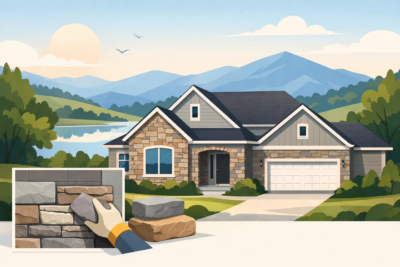
For homeowners across the Shenandoah Valley, the best choice often balances architectural character, the size of the installation area, and the finish details that bring the project together. A rugged field stone may be exactly right for a broad foundation or mountain-view exterior, while a cleaner ledge or stack stone can give a contemporary addition the definition it needs.
Start With the Architecture of Your Home
Stone should support your home’s architecture rather than compete with it. Look at the roof pitch, siding or brick color, window style, trim width, and overall proportions before narrowing down profiles. A large, irregular stone profile can give a plain façade welcome depth, but it may overwhelm a small cottage with delicate trim and modest rooflines.
Traditional homes often have room for more variation in stone size and shape. Field stone and cut stone can work especially well on Colonial-inspired, farmhouse, craftsman, and rural properties because their natural variation feels established and substantial. On a home with clean lines, large windows, or modern metal accents, the more linear rhythm of ledge stone or stack stone may create a better fit.
There is no rule that says a traditional home cannot use a more contemporary profile, or that a new home must use crisp, uniform stone. The question is whether the profile repeats the visual language already present in the home. Horizontal siding, long low rooflines, and rectangular windows often pair naturally with elongated stone. Heavier timber details, arched openings, and varied exterior textures can carry a more irregular profile.
Choose the Right Stone Veneer Profile for the Surface
The location of the stone matters as much as the stone itself. A profile that looks striking across a full front elevation may feel too busy on a narrow column. Likewise, a profile with small pieces can get lost on a tall chimney viewed from the street.
For a large exterior area, such as the lower portion of a façade or a full gable, choose a profile with enough size and variation to read from a distance. Field stone and larger cut stone profiles give broad surfaces a grounded, natural appearance. They also create visual movement across a wide wall, which can keep a large expanse from feeling flat.
For chimneys, consider the vertical scale. A tall chimney needs stone with enough presence to avoid looking like a patchwork of tiny pieces. Cut stone, field stone, and substantial ledge profiles can all work well, depending on the home’s style. If the chimney is the main focal point from the road, use the same profile elsewhere on the home in a smaller application, such as the foundation or entry, to create continuity.
Columns and entry walls usually benefit from a profile that is proportional to their width. Smaller, tighter stone can suit slender columns, while larger pieces may look crowded or require awkward cuts. On a broad porch pier, a bolder profile can make the structure feel intentional and well anchored.
Interior accent walls allow more freedom because they are viewed up close. Stack stone or ledge stone can add clean texture behind a fireplace, in a dining room, or around a bar area. Still, consider furniture placement and lighting. Highly textured stone creates attractive shadow lines, but an overly dark or busy selection can make a smaller room feel enclosed.
Understand What Each Profile Brings to a Project
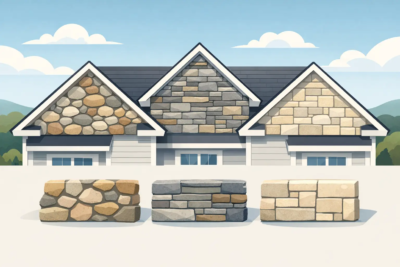
The names of stone profiles describe more than appearance. They signal the kind of pattern, texture, and visual weight you can expect.
Cut Stone
Cut stone has a more tailored appearance, with defined edges and a balanced pattern. It is a strong option for homes that need a refined, enduring look without appearing overly formal. It works well on façades, foundations, chimneys, and entry features, particularly when you want the stone to feel orderly but not sterile.
Field Stone
Field stone is known for its more irregular shapes and natural character. It can bring a sense of age, permanence, and regional warmth to a home. Because it has a varied look, field stone is especially effective on larger surfaces and homes with rustic, farmhouse, craftsman, or countryside influences.
Ledge Stone
Ledge stone is typically more horizontal in shape and creates a layered appearance. It is a versatile choice for both exterior and interior applications, offering texture without the visual formality of cut stone. Its linear pattern can visually widen an entry wall, foundation, or fireplace surround.
Stack Stone
Stack stone has a tighter, more contemporary profile, often with slim pieces and strong horizontal movement. It is a natural fit for modern exteriors, accent walls, outdoor kitchens, and fireplace surrounds. On a large traditional home, however, stack stone can look disconnected unless its color and surrounding materials help bridge the styles.
Look at Scale From the Street, Not Just the Sample Board
A stone sample is useful for evaluating color and texture, but it cannot show how a profile will perform across an entire wall. Stone that appears beautifully detailed in a small display may look overly busy when installed on a two-story chimney. Conversely, a large-profile stone can look understated on a sample board yet feel exactly right from curb distance.
Stand across the street from your home and identify the areas people notice first. Often, that is the front entry, chimney, garage return, foundation, or a prominent gable. These focal points can support a more distinctive profile, while secondary areas may call for restraint.
It also helps to consider the viewing distance inside the home. A fireplace surround is seen from several feet away, not from the curb. Fine texture and color variation become more noticeable there. For that reason, an interior installation may benefit from a profile that would be too detailed for a large exterior wall.
Build a Color Palette Around Fixed Elements
Stone color should coordinate with materials that are staying: roofing, brick, siding, window frames, shutters, and hardscape. Replacing stone later is far more involved than repainting a front door, so choose a palette with the larger investment in mind.
Warm gray, tan, brown, cream, and charcoal tones all appear throughout Shenandoah Valley homes, but the right blend depends on the undertones around it. A gray roof may have cool blue undertones or warmer brown notes. Brick may read red from a distance but contain tan, charcoal, or buff highlights up close. Bring those details into the decision.
Avoid selecting stone solely because it matches one color exactly. A successful veneer usually coordinates through a range of related tones. A profile that includes a few echoes of the roof, trim, or brick often looks more natural than one that matches a single color too perfectly.
Plan the Details Before Stone Is Installed
The most convincing stone projects are designed as complete compositions. Corners, transitions, caps, sills, keystones, house numbers, and lighting all influence the finished result. A beautiful veneer profile can lose impact when it ends abruptly at a porch wall or meets siding without a thoughtful transition.
For columns and retaining features, wall and pier caps provide a finished top edge while helping the stonework feel substantial. On an entry or address feature, coordinated street numbers and architectural keystones can turn a functional detail into part of the design. These pieces do not need to match every stone exactly. They should share the same level of craftsmanship, color direction, and visual weight.
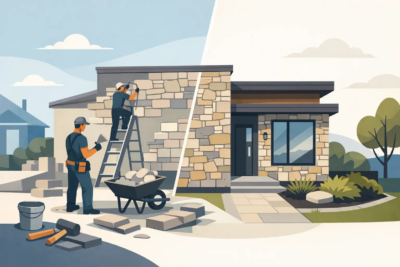
Ask early how the stone will wrap outside corners, meet doors and windows, and transition into siding or brick. This protects the design from last-minute compromises and helps your mason plan cuts that look intentional rather than improvised.
Use Project Photos to Test Your Instincts
When comparing profiles, study completed homes with similar proportions and applications to yours. Look beyond whether you like the stone itself. Notice where it was used, how much of the façade it covers, the color of the roof, and whether the profile supports the home’s shape.
A photo of a large field stone chimney may inspire you, but its effect may come from the chimney’s size, the deep roof overhang, and the capstone as much as the veneer. A stack stone accent wall may look crisp because it is paired with dark windows and minimal trim. Context is what turns a good product choice into a finished home that feels well designed.
Grizzly Stone helps homeowners and building professionals evaluate these details before committing to a profile, so the selected veneer works with the project rather than simply filling a surface.
The right stone veneer profile should make your home feel more like itself: more finished, more substantial, and more connected to the character you want it to carry for years to come. Bring together photos of your home, samples of fixed exterior materials, and a clear view of the areas you want to improve. That preparation makes the final selection far more confident and far more beautiful.